Sunday, April 22, 2018

(Student writing C1.3) Nampo-dong, Busan - by Lee, Won-Hee


If there's one part of Busan I'd remember before my death, it would be Nampo-dong, the old city centre of Busan. I suppose I am keen on Nampo-dong because it is both lively and delicious. Whenever I walk through the area it feels like I am still alive and makes me extremely hungry*. 

(*Originally Lee wrote "makes me starving" - we don't say this in English)


There are a lot of places in Nampo-dong you mustn't miss, even if you don’t have much time. Firstly, the food stalls which line most of the side streets. These reminds you (notice the error here? Always look back over your writing to look for this kind of error) of your grandmother. The stall workers often give you more food than you pay for. What's more*, (Lee originally wrote "moreover" - I changed it to what's more, which is less formal)  they are always welcoming and open to having a real honest chat. You find out how they actually are, or you might even get some advice if you have troublesome issues in your own life. In all honesty*, (Lee wrote "to be honest" - we say "to be honest" when we are reluctantly admitting something that might offend someone, we use "in all honesty" when we are being less apologetically honest) this is my main motivation for visiting Nampo-dong. But you should at least try as many snacks as you can: rice cakes, fish cakes, different kind of fried foods, Korean pancakes (pan-jeon*) (I put the Korean word in here - you should introduce the reader to some words from your language in the text because the purpose of the text is to give them practical information about your culture), candied strawberries and other Korean delicacies. 


Nam-pong glitters, shines and sings at night with a thousand street lamps and store lights. Depending on district, you can feel a different vibe, from places that get sea breezes, to cosmopolitan shops, to live concerts. (I helped with this paragraph, but it is the best passage in the piece for descriptive clarity.)


Nampo-dong has the famous Jagalchi seafood market with dining right on the peer by the habour. The international market, known as Gukje market has foreign goods, and also busking areas. Every place I've mentioned has different qualities of light. And if you go to any of them you can’t help hearing real street music, not the fake music which flows from shops, cafés and restaurants. 

There's Yongdusan Park too, with its tower, right in the heart of Nampo-dong. From the tower you can look out over Nampo-dong and further out to Yeongdo Island across the water. The park is the place to come if you just want to hang around feeding the pigeons and catch up with yourself.*

(One thing Lee does well in this text is using "you" and "I". It's very simple but it keeps the relationship between reader and writer strong)


(Student writing C1.3) Kallur - by Boas Andreasen


Having driven for over an hour from Tórshavn, I finally arrived at the port in Klaksvík from whence the small ferry to Kalsoy departs. It was a gloomy and quiet morning and multiple cars were already lined up, ready to get on the ferry. The ferry was quite small, so I was nervous about having arrived too late, but luckily I was one of the last cars to get on.

From there it was a smooth ride over hill and under hill, and soon I had reached the small village of Trøllanes. The name Trøllanes meaning Troll peninsula was given because in the old days people believed that trolls lived in the mountains. It is the village where the road ends, so after parking the car I climbed over a fence and started hiking. Unlike most hiking trails in other countries there are no signs and no path to follow, but after walking for about an hour I reached the deep green valley engulfed by rugged mountains from which you can see the cliff with the iconic red and white lighthouse called Kallur. 

Once I reached the lighthouse I was blown away by the breath-taking view. I had seen multiple pictures online before arriving, but after seeing it with my own eyes I felt a real sense of peace and I was reminded why I still call these islands home. To get a different view of the lighthouse I took this narrow and dangerous path out to the edge of the island and from there all you could see was green islands and a never-ending sea. Despite there being a bit of a breeze, all you could hear was relaxing bird song and bleating sheep, and wherever you looked there were stunning views. I felt like I could stay there forever, but after taking everything in for the last time I took the ride back home feeling awestruck and inspired.


With Teacher corrections: 

These are very minor corrections, but I thought it would be useful for students to see the places where I felt Boas was using slightly the wrong language. Besides that his writing is very accurate and also descriptively alive.
Having driven for over an hour from Tórshavn, I finally arrived at the port in Klaksvík, where the small ferry to Kalsoy departs. It was a gloomy and quiet morning and a multitude of  vehicles were already lined up, ready to get on the ferry. The ferry was quite small, so I was worried I was too late, but luckily I was one of the last cars to get on.
From there it was a smooth ride over the sea, over hill and under hill, and soon I had reached the small village of Trøllanes. The name of Trøllanes was given because in the old days people believed that trolls lived in the mountains of the peninsula. It is the village where the road ends, so after parking the car I climbed over a fence and started hiking. Unlike most hiking trails in other countries there are no signs and no path to follow, but after walking for about an hour I reached the deep green valley engulfed by rugged mountains from which you can see a cliff with the iconic red and white lighthouse known as Kallur. 
Once I reached the lighthouse I was overwhelmed by the breath-taking view. I had seen uncountable pictures online before arriving, but after seeing it with my own eyes I felt a real sense of peace and I was reminded why I still call these islands home. To get a different view of the lighthouse I took a narrow and treacherous path out to the edge of the island and from there all you could see was green islands and a never-ending sea. Despite there being a bit of a breeze, all you could hear was relaxing bird song and bleating sheep, and wherever you looked there were stunning views. I felt like I could stay there forever, but after taking everything in for the last time I made the journey back home feeling awestruck and inspired.

Wednesday, April 18, 2018

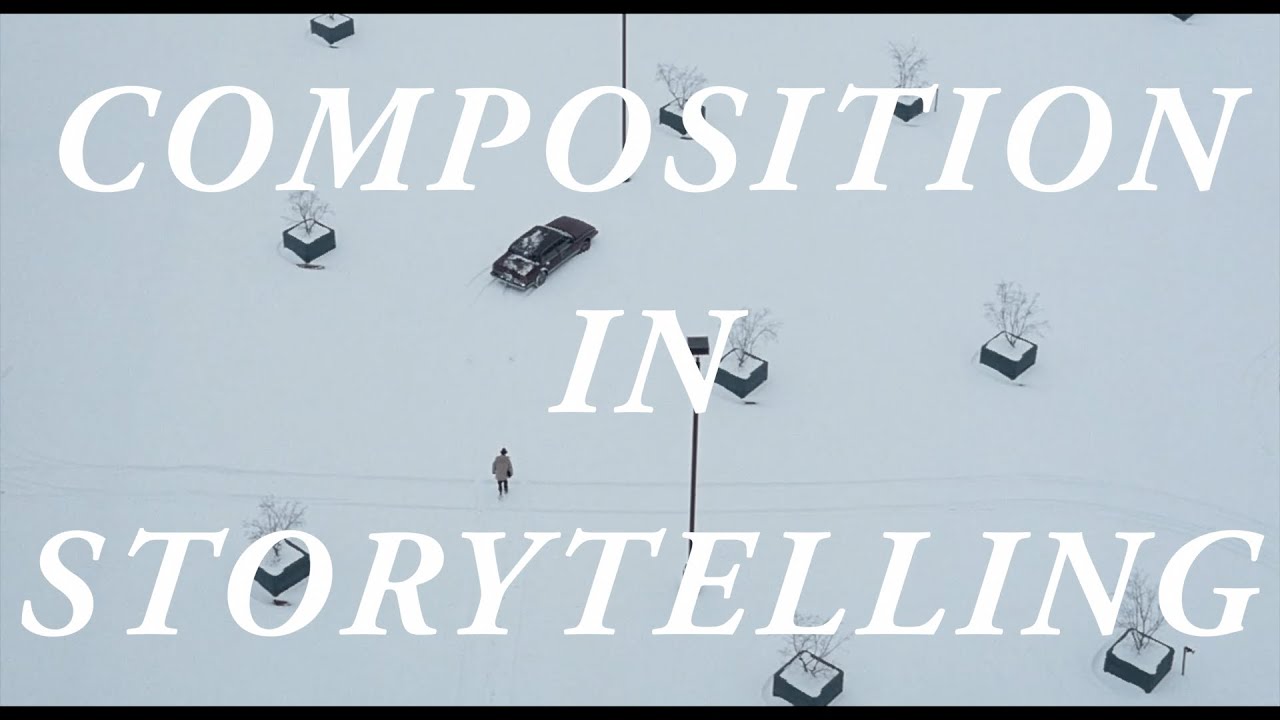
(Advanced Film / Lit SPIN) Composition in Storytelling


What are the rules of composition and when should we break them?

Before watching:

What are the following things?

Staging
Framing
Depth
Balance
The rule of thirds
The golden ratio
Triangular composition
The Kuleshov effect
A frame within a frameLines of persective
Fpoint of convergaence


What's fundamental principle of cinema? Editing? Movement? Light and shadow? Timing?

Why might someone claim that it is composition?

Watch

Composition in Film


Part 1

0:00 – 3:00

What do all the first images have in common?

Why is composition a technical necessity in films?

What can composition add beyond good technique?

What did the Kuleshov effect help filmmakers realise?


Part 2

3:00-5:00

Where did early filmmakers generally get most of their techniques from?

Why did the actors generally face the camera in early films?

Why did filmmakers not explore spatial depth?

What does the speaker mean by ‘framing’?

What did the German Expressionists introduce into cinema?

What did wide angles often get used for?

What did canted angles get used to express?

How did the close-up change the possibilities of cinema?


Part 3

5:00-8:44

What is the first objective of composition, in the speaker’s opinion?

__________________

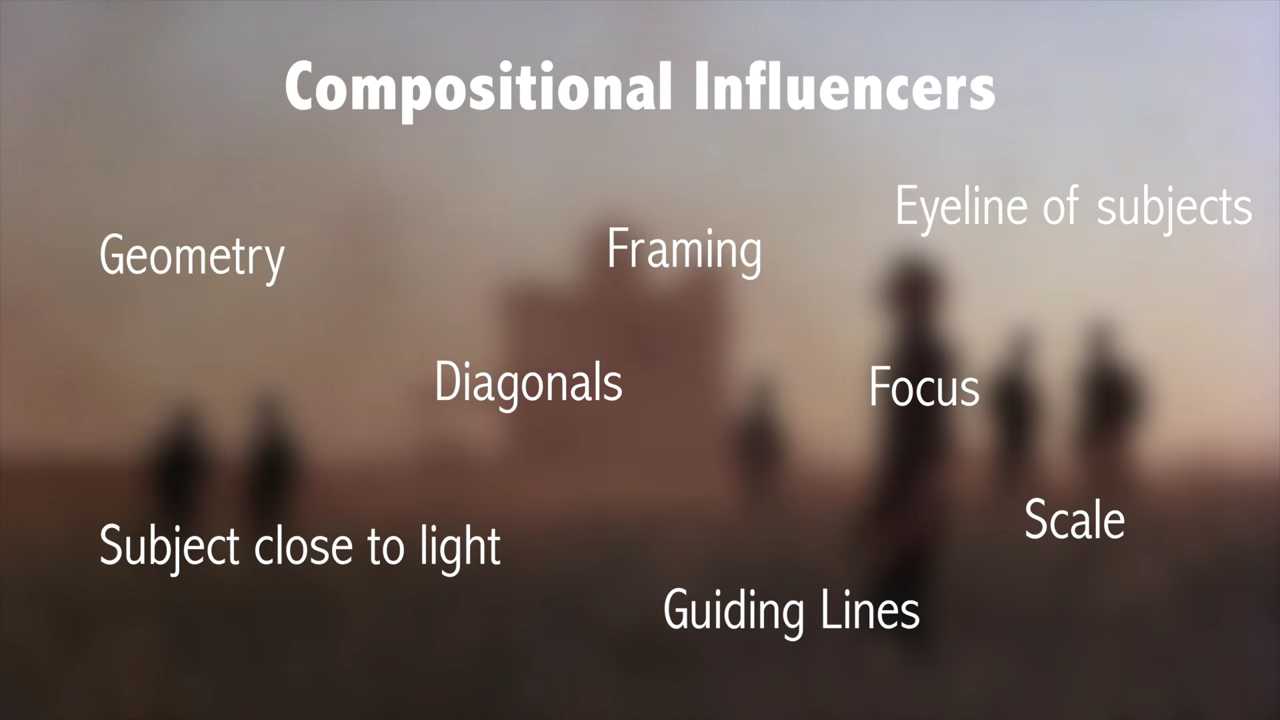
Which uses Compositional Influencers:

Geo_____
Fr_____
Dia_____
Subject clo___ to ___
Gui_____ l_____s
Eyel____ of s_____
F______
Sc____

These control sight. But they can also introduce interesting sbetxtu

What do frames within the screen frame help to do?

What is an example of a frame-within-a-frame introducing a subtext?

Why might filmmakers look for unexpected ways of making frames?

How can lines of convergence be used?


We will stop here and save the rest for another day.


Review 0:00 - 4:45

Listen in two sections, put these phrases in the order you hear them:

1.

tried and tested formulas
versatility
a case in point
sensory overload
be that as it may
Under the umbrella of
In a nutshell
canvas
checkboxes
pragmatism
templates


2.

to hail from
impact
in the grand scheme of things
to be championed
pioneers
epics
as such
standard practice
nuances
newfound methods
like never before


Image result for composition in storytelling


Check

1.

Under the umbrella of
In a nutshell
canvas
checkboxes
a case in point
sensory overload
pragmatism
templates
tried and tested formulas
versatility
be that as it may

2.

in the grand scheme of things
to hail from
impact
as such
standard practice
to be championed
pioneers
epics
like never before
nuances
newfound methods


Sunday, April 15, 2018

The Needham Question


Paper Making 105 A.C.
Movable Type Printing 960-1279 AD.
Gunpowder 1000 A.D.
Compass 1100 A.D.
Alcohol 2000 BC-1600 BC.
Mechanical Clock 725 A.D.
Tea Production 2,737 BC.

Silk 6,000 years ago.

From Acupuncture to the Zeotrope, the Chinese seem to have invented just about everything! So why did the Industrial Revolution happen in Europe not China?


Listen

The Needham Question