Tuesday, March 28, 2023

Phantom Ave


Rubbish truck swallowing a bunch of balloons. 

Two young men in black New World outfits, a long way from the supermarket.

Do the guys in the BP Connect, connect?

Man sleeping against an ATM. No one can get to their money.

Walking past the same tree having the same doubt.

Each week I start at zero. I go as deep as I can into negative numbers then head back to zero.

In a nightmare the prime minister strangled me with his tie.

An enormous obvious out my front window. I stare at it all day. Its light floods the room all night.

The old cemetery was incorporated into the new shopping mall. Trolleys scuff the headstones. Some shoppers leave fresh flowers, bought at the mall florists. 

Somewhere on a screen I cross the park in the moonlight.

Papyrus thriving in concrete. 

I try to hypnotize other passengers on the bus, other passengers try to hypnotize me.

Imagine passing habitable planets as uninhabitable ones. 

Conversations in K-Mart look really different when you can see auras.

On one side of the motorway there's an empire of locks, on the other side, there's an empire of keys.

Wabi-sabi police car.

I think I might be grey, not going grey, madly screamingly grey.

Any steps can be temple steps.

Sometimes, the billboards are the only refuge of colour.

Paradox Mall

Rocks lining the road stop it floating away. 

You wake up at sunset, work all day at sunset, go to bed at sunset.

He had a convincing voice. He barely needed to open his mouth before you were convinced completely. He didn’t even need to open his mouth, or his eyes. He just sat there convincing everybody, including himself. 

An armchair on an asteroid.

Bank of the Self. 

The only passenger on the bus, the only person in the gas station, the only shopper in a supermarket aisle, a cat sitting in the road late at night.

Furniture breaks free and wanders across the city, joins a herd. The herds are rounded up by furniture trucks.

Before I can start seeing I have to watch some ads.

At first, I could only make out tiny fragments. Then images began to form, shadowy blobs, which slowly took on colour, clarity and volume. I moved among them, hearing sounds and sensing living presences.

The suburb has wind machines installed in the four quarters.

The new city will be made of an indestructible material which will radiate a vibration that eliminates all tension.

From the bus window, I glimpse someone in a brown dressing gown heading towards their letterbox. Later, I find a brown dressing gown in my wardrobe.

Laundromats began as cave temples. Faint constellations are still visible on the ceilings. People descended into the caves, stripped off and threw their clothes into spinning drums. They stared at the spinning drums and went into a trance then danced naked all night under the stars.

When I first arrived here there was nothing to see, just an empty field. Then some locals turned up and began to gesticulate. After a while, the town began to appear to me, in exquisite detail, right down to the numbers on letterboxes.

I own the Bank of the Self. I have only one customer.


Sometimes it’s good to stop and imitate things you see. A swaying tree.

Pyramid supermarket - select items by pressing on hieroglyphs. Later the shopping rolls out in a sarcophagus.

Spirit supermarkets are not arranged in aisles, but isles. Don't overload your boat.

Exclamation mark crash-landing site.

Rocks lining the road stop it floating away.

Corner of Depression Drive and Suffocation Street

You can drive right into the restaurant, drive right up to the counter, through the kitchen, up the wall and across the ceiling. 

The hidden supermarket has no sign, no carpark. Shoppers feel along the darkened aisles, tossing items hopefully into their trolleys. The usual announcements and music help normalise the atmosphere.

On the bus, I try to hypnotize other passengers. Other passengers try to hypnotize me.

Billboard sky. Billboard cloud. Billboard sea. 

With each improvement the city gets worse. 


Tuesday, March 21, 2023

(Advanced) What writers really do when they write


Try this:

and then x 2      this      When       then        and add       that         and
____ I write, “Bob was an asshole,” ____ , feeling ___ perhaps somewhat lacking in specificity, revise it to read, “Bob snapped impatiently at the barista,” ___ ask myself, seeking yet more specificity, why Bob might have done that,  ___ revise to, “Bob snapped impatiently at the young barista, who reminded him of his dead wife,” ____ pause ___, “who he missed so much, especially now, at Christmas,” – I didn’t make  ___ series of changes because I wanted the story to be more compassionate. 


When I write, “Bob was an asshole,” and then, feeling this perhaps somewhat lacking in specificity, revise it to read, “Bob snapped impatiently at the barista,” then ask myself, seeking yet more specificity, why Bob might have done that, and revise to, “Bob snapped impatiently at the young barista, who reminded him of his dead wife,” and then pause and add, “who he missed so much, especially now, at Christmas,” – I didn’t make that series of changes because I wanted the story to be more compassionate. I did it because I wanted it to be less lame.
But it is more compassionate. Bob has gone from “pure asshole” to “grieving widower, so overcome with grief that he has behaved ungraciously to a young person, to whom, normally, he would have been nice”. Bob has changed. He started out a cartoon, on which we could heap scorn, but now he is closer to “me, on a different day”.
How was this done? Via pursuit of specificity. I turned my attention to Bob and, under the pressure of trying not to suck, my prose moved in the direction of specificity, and in the process my gaze became more loving toward him (ie, more gentle, nuanced, complex), and you, dear reader, witnessing my gaze become more loving, might have found your own gaze becoming slightly more loving, and together (the two of us, assisted by that imaginary grouch) reminded ourselves that it is possible for one’s gaze to become more loving.

- George Saunders, author of the Man Booker Prize winning Lincoln in the Bardo

1. What would you say is the key word of this extract?

2. What does the writer do with his first sentence?

3. How does he start the second paragraph? Why?

4. What trick does he use to start paragraph three?

5. What is the writer trying to say about the process of writing?


Read the whole article here:

What writers really do when they write


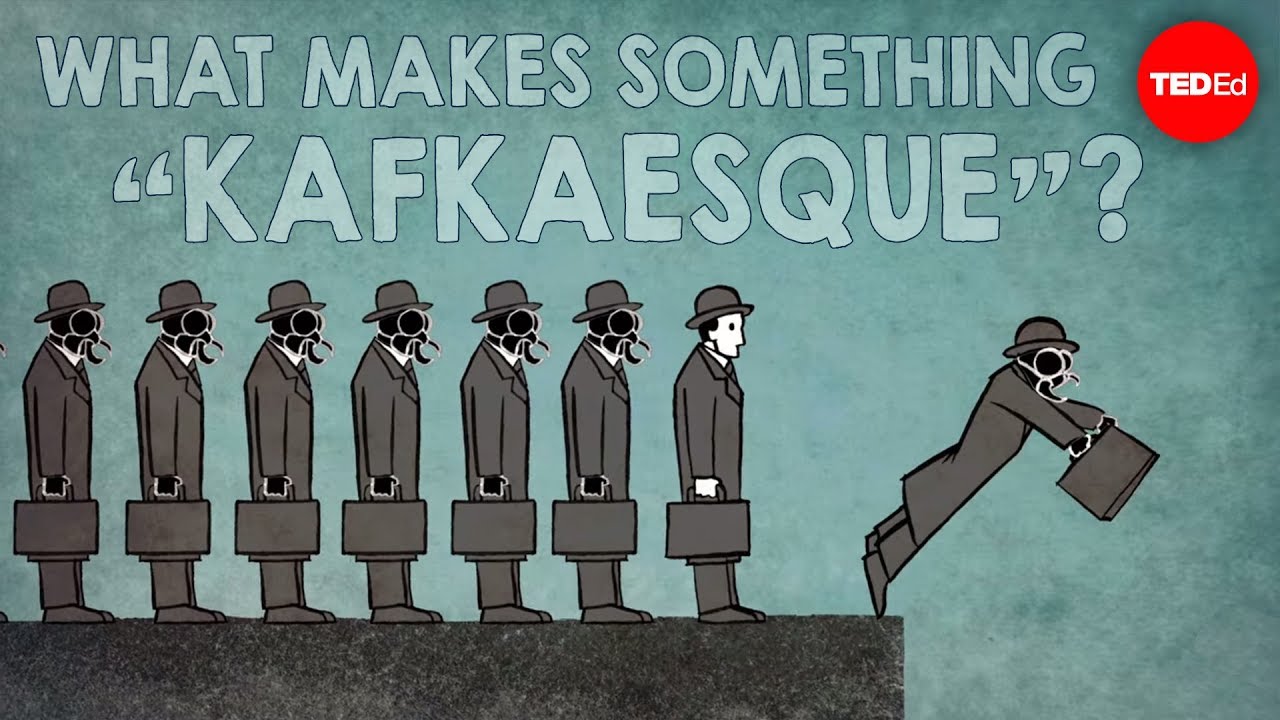
(Advanced) What makes something Kafkaesque?


The term Kafkaesque has entered the vernacular to describe unnecessarily complicated and frustrating experiences, especially with bureaucracy. But does standing in a long line to fill out confusing paperwork really capture the richness of Kafka’s vision? Beyond the word’s casual use, what makes something "Kafkaesque"?


Before watching


Who is Poseidon?


Do you ever feel that life is absurd?


Have you ever been to Prague?


Have you ever had bad experiences with bureaucracy?


Have you ever worked in bureaucracy?


What are bureaucrats like? Write down some adjectives - positive and negative...


Vocab


-nw-rthy


c-rc-l-r


-mb-lm-t-c


tr-g-c-m-c


dr--m l-g-c


-rb-tr-ry


c--ght -p -n


r--lm


gr--tn-ss


tw-st


an-nym-ty


fr--d


str-ngth -f w-ll


tyr-nny


unst-pp-bl-


f-nct--n


p-rp-t--t-


th-s


--t -f n-wh-r-


b-w-ld-r-ng


pr-c--d-ngs


sc-n-r--


c-me -p w-th


t- -nt-r th- v-rn-c-l-r


n-v-g-t-


c-s--l -s-


m-nd-n-


-n p-rt


c-mp-ll-d


t-rn --t t- b-


-n th- f-rst pl-c-


b- sw-mp-d w-th


d-m--n


t-ll-ng (adj)


bl--kn-ss


n-ns-ns-c-l


c-nv-l-t-d


sh-rtc-m-ngs


f-r th- b-tt-r


Quizlet:

36 terms used


Link:

What makes something "Kafkaesque"?


Guide questions:


True / false / doesn't say

1. Joseph K had done nothing wrong.
2. The Trial is one of Kafka's lesser known novels.
3. "Kafkaesque" is a word Kafka himself used.
4. Kafka's stories don't deal with frustrating aspects of bureaucracy.
5. Kafka enjoyed working in an office environment.
6. Kafka's stories are often extremely illogical.
7. Kafka's stories are based on ancient myths.
8. Metamorphosis is about a butterfly.
9. The protagonist of The Hunger Artist dies at the end of the story.
10. Even the powerful people in the Trial have no power to serve justice.
11. Kafka's stories lack a sense of humour.
12. Kafka's stories show us we don't have any power to change the world.


25 question Kahoot


Sunday, March 12, 2023

On Ancient Greece, the Nature of Money, and the End of Capitalism


I am ugly, but I can buy for myself the most beautiful of women. Therefore I am not ugly, for the effect of ugliness – its deterrent power – is nullified by money. I, according to my individual characteristics, am lame, but money furnishes me with twenty-four feet. Therefore I am not lame. I am bad, dishonest, unscrupulous, stupid; but money is honoured, and hence its possessor. Money is the supreme good, therefore its possessor is good. Money, besides, saves me the trouble of being dishonest: I am therefore presumed honest. I am brainless, but money is the real brain of all things and how then should its possessor be brainless? Besides, he can buy clever people for himself, and is he who has power over the clever not more clever than the clever? Do not I, who thanks to money am capable of all that the human heart longs for, possess all human capacities? Does not my money, therefore, transform all my incapacities into their contrary?

K. Marx


1. Do you agree with Marx? 
2. What are some benefits of money?


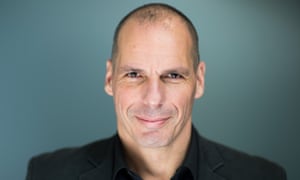
Watch the opening part of a lecture by Former Greek finance minister Yanis Varoufakis:

On Ancient Greece And The Nature of Money


1:30 - 3:30


1. What was unbeknownst to the young Yanis?

2. What was the young Yanis showered with? Why?

3. What was bestowed upon him?

4. What (or who) did he come across later in life?

- What do these phrases have in common?


4. In way did Yanis' experience as a young boy resonate with Marx's view of money?


4. Yanis sees money as "value's ethereal alter ego"? What does he mean?


Discuss

Capitalism is ending because it has made itself obsolete, former Greek finance minister Yanis Varoufakis says


What do you think the dictionary definition of capitalism is? 


capitalism

ˈkapɪt(ə)lɪz(ə)m/
noun
  1. an economic and political system in which a country's trade and industry are controlled by private owners for profit, rather than by the state.


Discuss this quote:

"it is easier to imagine an end to the world than an end to capitalism"

(attributed to Fredric Jameson)


Exclusive: Former economics professor says rise of artificial intelligence will spell end of neoliberal system.


Reading:

a) undermine   b) the private means    c) capitalism    d) destroy
e) the people    f) dividend     g) redistributive       h) obsolete

Former Greek finance minister Yanis Varoufakis has claimed capitalism is coming to an end because it is making itself 1_______.  


The former economics professor told an audience at University College London that the rise of giant technology corporations and artificial intelligence will cause the current economic system to 2______ itself. 

Warning Karl Marx “will have his revenge”, the 56-year-old said for the first time since capitalism started, new technology “is going to 3______ a lot more jobs than it creates”.
He added: “Capitalism is going to undermine 4_______, because they are producing all these technologies that will make corporations and 5_______ of production obsolete.
“And then what happens? I have no idea.”
Describing the present economic situation as "unsustainable" and fearing the rise of "toxic nationalism", Mr Varoufakis said governments needed to prepare for post-capitalism by introducing 6_______ wealth policies. 
He suggested one effective policy would be for 10 per cent of all future issue of shares to be put into a "common welfare fund" owned by 7______. Out of this a "universal basic 8_______" could be paid to every citizen.


Tuesday, March 7, 2023

(Advanced Film / Lit SPIN) Cinema and geometry


One of Akira Kurosawa’s many gifts was staging scenes in ways that were bold, simple and visual.

1. What does Tony mean by "standard coverage"?
2. What shapes are focused on in the scene from The Bad Sleep Well?
3. Why does Kurosawa resist cutting between reactions?
4. What happens to Shirai as the triangle stretches out?
5. Why is the door always in frame in the background?
6. Why does the camera reframe as Moriyama approaches?
7. Why is Nishi's face closest to centre frame?
8. How does Kurosawa break the triangle?
9. How did the scene begin?
10. Which character doesn't say a word in the scene?
11. How does geometry help us to follow the drama?
12. What role does verbal drama play in the scene?
13. How does the sequence 1, 2, 3, 2, 1 relate to the scene?
14. What other geometric shapes does Kurosawa use?

 Watch:

The Bad Sleep Well