Monday, May 22, 2017

Shakespeare and rhetoric


The rules of rhetoric were second nature to the great phrase-makers. Shakespeare knew them well. 

Author Mark Forsyth says:


“If you think genius is some kind of magical thing, lightning that hits you from heaven, it’s not that. Shakespeare was a guy who learned all the skills, the rules, the formulas and the figures of rhetoric and then he deployed them better than anyone else has ever deployed them."

Listen from 7:40 to 9:07

Shakespeare and rhetoric

AABA

For more on rhetoric in modern day politics:

Listen from 9:07 to 12:00

Chiasmus
Threes


Some terms to describe rhetorical formulas:

Alliteration: repetition of the same sound beginning several words in sequence.

*Let us go forth to lead the land we love. J. F. Kennedy, Inaugural

Anaphora: the repetition of a word or phrase at the beginning of successive phrases, clauses or lines.
*We shall not flag or fail. We shall go on to the end. We shall fight in France, we shall fight on the seas and oceans, we shall fight with growing confidence and growing strength in the air, we shall defend our island, whatever the cost may be, we shall fight on the beaches, we shall fight on the landing grounds, we shall fight in the fields and in the streets, we shall fight in the hills. We shall never surrender. Churchill.

Antithesis: opposition, or contrast of ideas or words in a balanced or parallel construction.
*Brutus: Not that I loved Caesar less, but that I loved Rome more. Shakespeare, Julius Caesar

Assonance: repetition of the same sound in words close to each other.
*Thy kingdom come, thy will be done.

Chiasmus: two corresponding pairs arranged not in parallels (a-b-a-b) but in inverted order (a-b-b-a); from shape of the Greek letter chi (X).
*...ask not what your country can do for you, ask what you can do for your country. John F. Kennedy


Metaphor: implied comparison achieved through a figurative use of words; the word is used not in its literal sense, but in one analogous to it.
*Life's but a walking shadow; a poor player,

That struts and frets his hour upon the stage. Shakespeare, Macbeth

Metonymy: substitution of one word for another which it suggests.
*He is a man of the cloth.


Oxymoron: apparent paradox achieved by the juxtaposition of words which seem to contradict one another.
*I must be cruel only to be kind. Shakespeare, Hamlet

Paradox: an assertion seemingly opposed to common sense, but that may yet have some truth in it.
*What a pity that youth must be wasted on the young. George Bernard Shaw

Simile: an explicit comparison between two things using 'like' or 'as'.
*Reason is to faith as the eye to the telescope. D. Hume [?]

Tautology: repetition of an idea in a different word, phrase, or sentence.
*With malice toward none, with charity for all. Lincoln, Second Inaugural

Sunday, May 21, 2017

(Advanced) Study Drugs


"...my lab partner was taking Adderall, and so were some of my friends. And so, you know, I tried it. I got a few. And I took one, and it worked. It worked really well. I could stay up. I could go to sports practice. When I got home, I could study. I could do my homework. I could wake up early, take an Adderall, be right on target, be ready to rock 'n' roll. And so, I took it to get ahead, to get that advantage, to make better grades, to be able to study longer. And as we’ve alluded to a little bit here, it was that competitive nature. You know, I was just trying to keep up. And it’s—it is a performance-enhancement drug."

"We’ve decided as a society that it’s too expensive to modify the kid’s environment—the school environment, parenting—so we have to modify the kid."

- Jameson Monroe

"I know psychiatrists—there’s one a couple blocks from here—where, literally, it will take you longer to fill out the paperwork in the waiting room than it will for him to diagnose you with ADHD and give you a prescription for stimulants."

- Alan Schwarz


Watch from 32:20 (when Amy Goodman turns to John Edwards, whose son Johnny committed suicide):

The Selling of ADHD

1. What is Adderall?
2. ADD stands for Attention D______ Disorder 
3. Why does John believe his son was prescribed Adderall?
4. Why did John assume his son was under great care?
Transcript: 
John Edwards: Thank you. So, Johnny was a—went into Harvard in 2006. And between his freshman and his sophomore year, I discovered he was on Adderall during the summer, when he was home. And, you know, I kind of questioned. I thought Adderall was—from what I understood, was for attention deficit disorder. And I had some questions. It didn’t seem—Johnny was a class valedictorian at his high school, a top high school in Massachusetts, 4.0, a brilliant kid. He was a—I think he was about a 4.0, a straight-A student at Harvard. And he was also doing stem cell research and working on grants between his freshman and sophomore year. And he was just a brilliant kid, which paled in comparison to what a wonderful human being he was. And it seemed rather odd that he would be on a drug for attention deficit disorder. He seemed like the last person that would be on drugs, how you could achieve what he’s achieved and have that type of issue. But, you know, from what he shared with me and what I understand, that it seemed as though in his particular case it may have—he may have been given it to somehow boost his confidence or for some other reason. And I found it all a bit odd.
And I noticed during the summer, when we were on summer vacation in New Hampshire, he was having these huge effects with—best way I can describe, these woosh effects, where he’d get these [inaudible] bouts of anxiety, and he said it was due to the time-released product he was on, and his doctors were paying attention to it and working it all out. And, you know, the problem is, when your kids go off to college and they turn 18, you’re no longer involved in their care, even though I requested—I made a request. I said, you know, "Would you mind if I spoke with the person who’s treating you?" And then he checked into it, and they said, "No, that’s not really necessary." That’s what he told me. So I assumed he was under great care. I mean, he’s at Harvard, you know, wonderful, leading institution in the country.
And, you know, he then was prescribed a couple of additional medications, as well, which happened to be stimulants, as I learned later. And as part of that, he was feeling—over the coming months, I guess he had significant anxiety or concerns about it, even wrote an email to the person who had—he had been seeing, the nurse practitioner, and, you know, indicated, "Should I continue to take these?" And she said, "Yes, just make an appointment to come in and see me when you have a chance." And, unfortunately, two days after that email, he committed suicide at Harvard Medical School, completely out of the blue. And, you know, I—none of us in the family had any idea that something like this was—he had just been home for Thanksgiving. And it was just—it’s obviously devastated myself, my family, my daughter, in particular, Julia, and been a very, very difficult time for us, the last six years.
What do the phrases in bold italics mean?

Saturday, May 13, 2017

(Advanced) How's that working for ya? (Embattled Unitec reports $24m deficit)


Morale at Unitec is critically low with staff describing the environment as ruthless and chaotic. But Unitec chief executive Rick Ede says Unitec is trying to create an education system fit for the 21st century and it will not be changing tack. So how does the upper management of a large institution like Unitec balance its strategic goals with the needs of its staff? How ruthless can it afford to be?

Listen:

RNZ: Embattled Unitec reports $24m deficit

Wednesday, May 10, 2017

(Advanced) Sicko


HMO
eɪtʃɛmˈəʊ/
noun
  1. 1.
    BRITISH
    "the council is considering the idea of forcing the landlords of all HMOs to apply for a licence"


Watch:

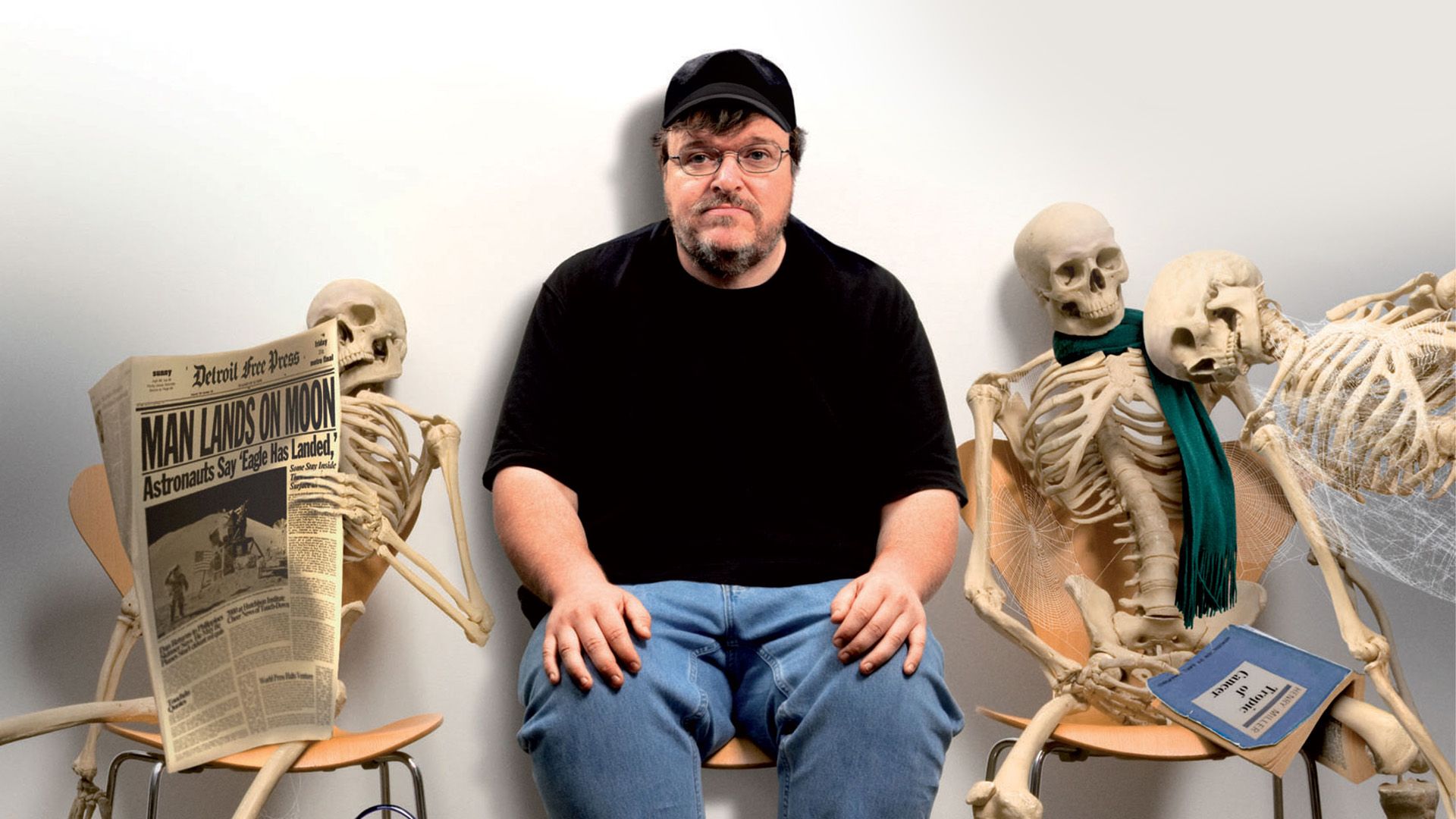
Sicko

Monday, May 8, 2017

(Advanced) How does anesthesia work?


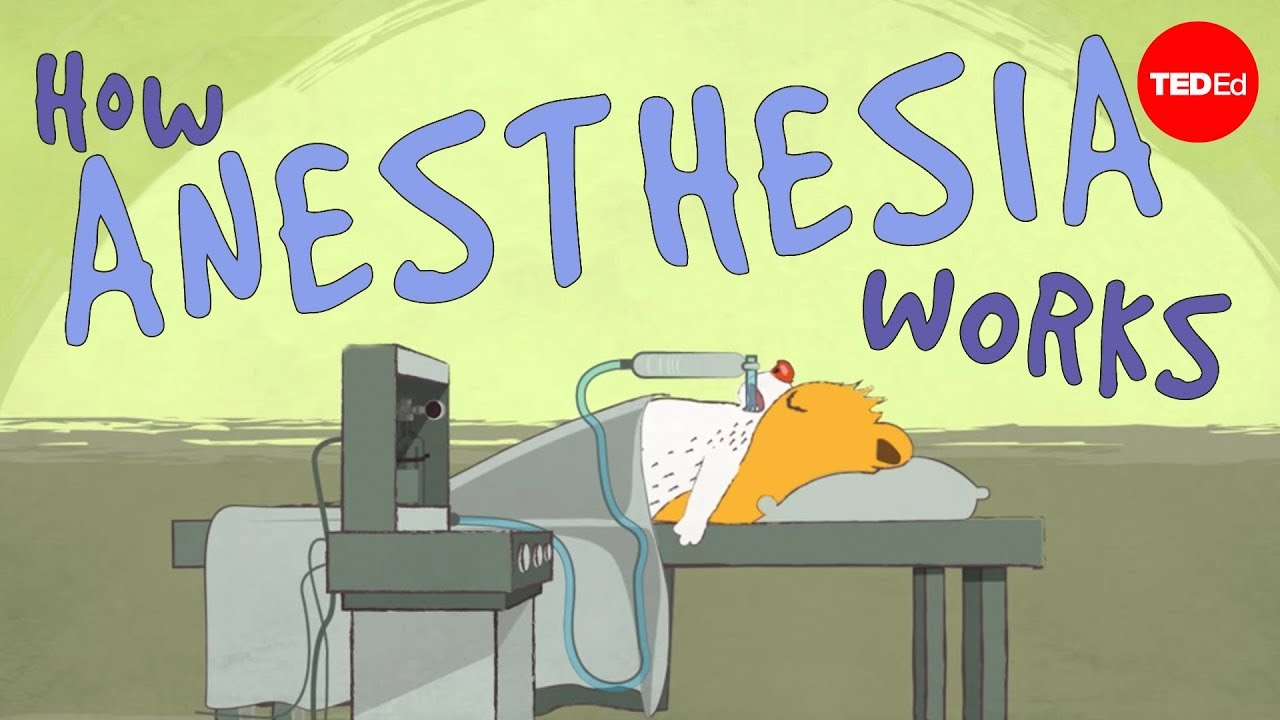
When under anesthesia, you can’t move, form memories, or — hopefully — feel pain. And while it might just seem like you are asleep for that time, you actually aren’t. What’s going on? Steven Zheng explains what we know about the science behind anesthesia. 

Watch

How does anesthesia work?

Sunday, May 7, 2017

(Advanced) Written in stone - the first Māori gardens


The Otuataua Stonefields Historic Reserve, in South Auckland, is home to New Zealand's earliest gardens and is a significant archaeological site.
Around the time of Joan of Arc and Henry V – sometime in the 15th century – new Polynesian arrivals to New Zealand were planting gardens. Lots of gardens. And the remnants of that remarkable early development can still be seen just a few minutes from the hustle and bustle of Auckland airport.
Link:
Written in stone - the first Māori gardens