Thursday, July 19, 2018

Sunday, July 15, 2018

(Advanced) Does your language shape the way you think?


"Suppose I say to you in English that “I spent yesterday evening with a neighbor.” You may well wonder whether my companion was male or female, but I have the right to tell you politely that it’s none of your business. But if we were speaking French or German, I wouldn’t have the privilege to equivocate in this way, because I would be obliged by the grammar of language to choose between voisin or voisine; Nachbar or Nachbarin."

“Languages differ essentially in what they must convey and not in what they may convey.”
- Roman Jakobson 

 Reading:

Does Your Language Shape the Way You Think?
By Guy Duetscher

(Advanced) Literary devices

Did you know there are nouns to name each of these literary devices?

Related image

meaning of a greater, often abstract, concept is conveyed with the aid of a more corporeal object

words beginning with letters belonging to the same sound group used in quick succession

a figure of speech whereby the author refers to a place, event, or literary work by way of a passing reference

a literary practice wherein the writer embellishes the sentence by adding more information to it in order to increase its worth and understandability

jumbling up parts of the word to create a new word

helps to establish a relationship based on similarities between two concepts or ideas

inverting the order of the noun and the adjective in the sentence

a short verbal accounting of a funny, amusing, interesting event or incident

lending a human quality, emotion or ambition to a non-human object or being

placing two sentences of contrasting meanings in close proximity to one another

a concise statement that is made in a matter of fact tone to state a principle or an opinion that is generally understood to be a universal truth

a reference to a concept, a person or an object that has served as a prototype of its kind and is the original idea that has come to be used over and over again

repetition of sounds produced by vowels within a sentence or phrase

deliberately leaving out conjunctions in the sentence, while maintaining the grammatical accuracy of the phrase

the author penning the story, poem or prose steps away from the text and speaks out to the reader

foretelling the future by turning to random portions of the Bible for guidance

the overall growth of the central character throughout the timeline of the story

words having jarring and dissonant sounds that create a disturbing, objectionable atmosphere

creating a fracture of sorts within a sentence where the two separate parts are distinguishable from one another yet intrinsically linked to one another

a figure of speech containing two phrases that are parallel but inverted to each other

exaggeratedly long and complex sentences 

associations people make with words that go beyond the literal definition

repetition of sounds in quick succession produced by consonants 

the explicit use of the dictionary definition or literal meaning of a word

the incidence where an implausible concept or character is brought into the story in order to make the conflict in the story resolve pleasingly

he distinctive tone or tenor of an author’s writings

a character in the story that is actually a counterfeit or a copy of a genuine character


a form of writing, mostly poetry, wherein the author describes another work of art, usually visual. Often rhetorical in nature and symbolic of a greater meaning.

acts as the afterword once the last chapter is over

added to a person or place’s regular name to attribute some special quality to it

the practice of using a comparatively milder or less abrasive form of a negative description instead of its original, unsympathetic form

the use of phrases and words that are noted for possessing loveliness or melody in the sound they create

another character in a story who contrasts with the main character, usually to highlight one of their attributes

the use of indicative word or phrases and hints that set the stage for a story to unfold without revealing the story or spoiling the suspense

playing with the regular positioning of words and phrases and creating a differently structured sentence to convey the same meaning

exaggerate the basic crux of the statement in order to produce a grander, more noticeable effect

use of words and phrases to create “mental images” for the reader

forming a rhyme in only one lone line of verse

changing the conventional placement of words to attract the reader's attention

playing around with words such that the meaning implied by a sentence or word is actually different from the literal meaning

placing a person, concept, place, idea or theme parallel to another to highlight the contrast between the two

use a twist of words, figure of speech or newly created compound sentence or phrase to refer to a person, object, place, action or idea

an understatement of an affirmative by using a negative description

deliberately misusing words by substituting words with similar sounding words that have different, amusing meanings

a meaning or identity ascribed to one subject by way of another

the practice of substituting the main word with a word that is closely linked to it

the mental and emotional disposition of the author towards the subject, which in turn lends a particular character or atmosphere to the work

the repetition of a specific theme dominating the literary work

Leaving matters open ambiguity to add romanticism and specialty to a concept

a situation of poetic justice wherein the positive characters are rewarded and the negative characters are penalized

words whose very sound is very close to the sound they are meant to depict

use of contradictory, contrasting concepts together in a manner that ends up making sense in a strange, and slightly complex manner

use of concepts or ideas that are contradictory to one another, yet, when placed together hold significant value on several levels

ascribes the human feelings of characters to nonhuman objects, nature or phenomena

the main clause of the sentence and/or its predicate are purposely held off and placed at the end 

the use of excessive language and surplus words to convey a meaning that could otherwise be conveyed with fewer words

the practice of attaching human traits and characteristics with inanimate objects, phenomena and animals.

the manner in which a story is narrated or depicted and who it is that tells the story

the process of using conjunctions or connecting words frequently in a sentence, placed very close to one another

joining together two or more words in order to create an entirely new word

a story that usually sets the tone for the main story

a device wherein a word is used in a manner to suggest two or more possible meanings

the order in which particular words rhyme

the practice of making fun of a human weakness or character flaw

drawing parallels or comparisons between two unrelated and dissimilar things

interchanging the first letters of some words in order to create new words or even to create nonsensical words 

a single, related chunk of lines in poetry

an uninterrupted and unhindered rendering of a particular character's thinking process

using an object or action that means something more than its literal meaning

using a part of something to refer to the whole or vice versa

 the depiction of a strong connection, link or bond between the different senses

the base that acts as a foundation for the entire literary piece

the appearance or proximity to being real, or the truth


Learn 36 of them here!!


Literary Devices


(Advanced) 'Every Language is a World'

What does it mean when something is 'lost in translation'? Why isn’t there an English word for 'schadenfreude'?


“Schadenfreude may well have come into the English language because there wasn’t a word that expressed that particular concept,” Professor Paul Warren says.
“English, of course, is a very avid borrower of words from other languages. There’s this strange idea that languages borrow from each other, I think English borrows but never gives back.”
Dr Sasha Calhoun says our need to express the things that are most important to us has a big part to play in what words come into being in different languages.
“Then the languages themselves get to work on what is expressed. But you can find all sorts of lovely examples.”
She cites an Australian Aboriginal word for the concept of sitting by a fire and rubbing the hands of the person next to you so both share in the warmth of the fire.
So did language evolve from the need to express an idea like that, or simply from the need to warn others of hazards?
“That’s the 65-million dollar question,” Dr Calhoun says. One theory is that language arrived alongside greater human cooperation.
“Particularly, the need for mothers to pass things along to their children.
“So the need to be able to teach methods and ways of living and ways of being in the world that were increasingly complex became something that mothers needed to pass on to children.”
It’s also not just words, it’s the sounds that make up words.  Take, for example, words that are synonyms for ‘small’ –  'wee' and 'tiny' have similar sounds.
“I think every language studied has some form of onomatopoeia,” Stephen Epstein says.
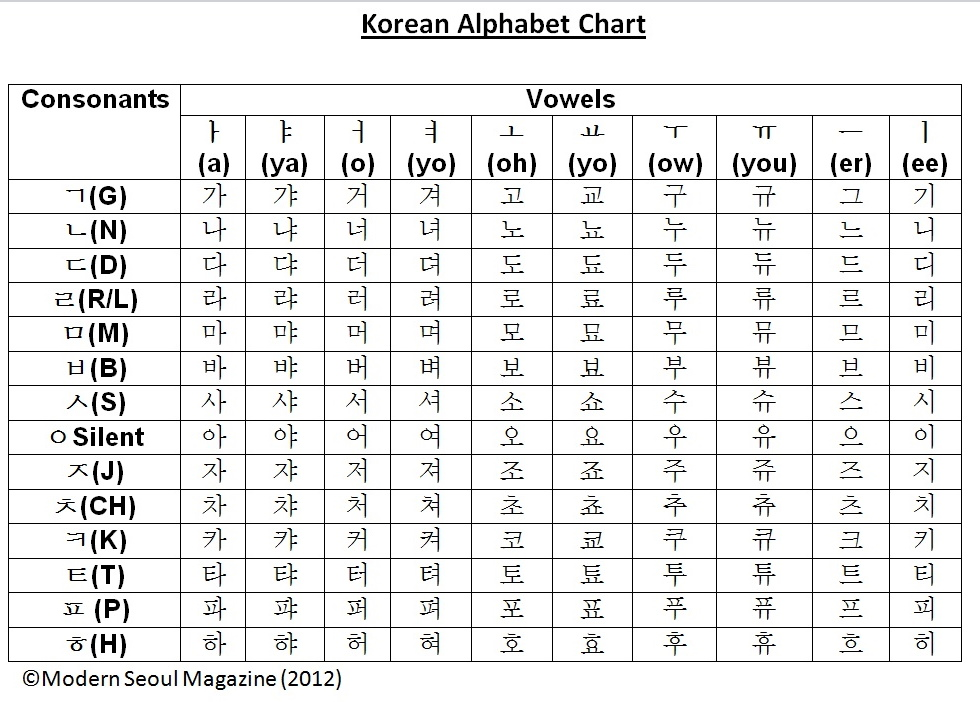
“But some languages, and where things get interesting is Korean, have what we might call ‘memetic’ words.”
“So they don’t represent a sound, but they might represent something that you see.”
He says that in Korean words like “twinkle, sparkle and glitter” have different vowel sounds depending on the size or intensity.
And then there’s the question of what counts as a word – apocryphally, various languages from around the polar region have “50 words for snow".
“In a lot of those languages, there are a lot more things put into what, in English, would seem equivalent to a word in terms of its sound structure and the way it functions,” Dr Calhoun says.
“But in terms of its meaning, it’s more equivalent to an entire sentence. ‘This is a man who has snow on him’ might be a word.
“Depending on how you count words, you can get four words for snow, or you can get several thousand.”
Great Ideas is a series, recorded in collaboration with Victoria University, about the ideas that have shaped the world we live in. It looks at what it takes to change our perspective and considers why these ideas still matter.

Listen:

'Every Language is a World'
Saturday, July 14, 2018

(Advanced) Breaking the Language Barrier


Tim is a senior at the Dalton School in New York City who has studied over 20 languages. His interest started at the age of 13, after several years of French and Latin, when he began learning Hebrew and soon moved on to more obscure tongues such as Pashto, Ojibwe and Swahili. As he describes it, his goal is not to achieve fluency in each, but rather to learn about foreign history and culture through the medium of language. He spends much of his time perfecting his linguistic skills in different neighborhoods around the city, and to date his Youtube channel has received over 3 million hits. Tim has been interviewed (in English, Mandarin, Arabic and Farsi, among others) for media outlets such as The New York TimesBBCThe Today Show,Reuters and The Economist. He is starting his freshman year at Harvard next year and plans to study linguistics.

Watch Tim's Ted talk:

Breaking the Language Barrier

Sunday, July 1, 2018

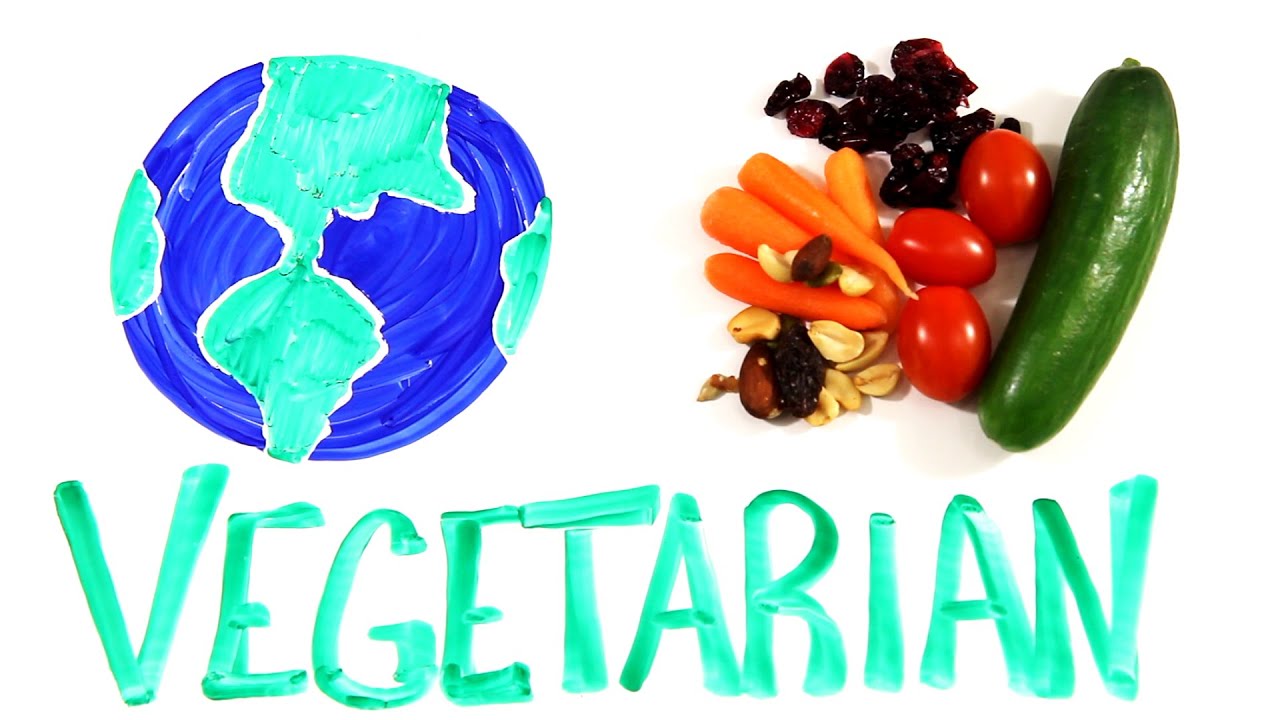
(Upper-Intermediate) What would happen if the world went vegetarian?


Watch:

What would happen if the world went vegetarian?


Guide questions

1. What is the worldwide rate of vegetarianism?

2. What's the difference between most pasture land and land used for crops?

3. What's the natural state of pasture land?

4. Why is livestock production worse than CO2 for warming global temperature?

5. What essential resource does meat production use up?

6. What are the common bi-products of the meat industry?

7. Are there more or fewer meat eaters worldwide than there were in the past?