Sunday, May 31, 2026

Monday, May 25, 2026
Asking a Favour

Polite & Formal
-
Could you possibly…?
-
Would you mind (doing)…?
-
I was wondering if you could…
-
I’d really appreciate it if you could…
-
Would it be too much trouble to…?
Friendly & Neutral
-
Can you do me a favour?
-
Can I ask you a favour?
-
Could you help me with…?
-
Would you be able to…?
-
Do you think you could…?
Casual
-
Hey, can you give me a hand?
-
Any chance you could…?
-
Mind helping me out?
-
Could you lend me a hand?
-
Can you help me out with…?
Noelia: Paul, ____ _____ _____ ____ ______? I need a favour.
Paul: I'm ___ ____ ______, but sure, what ___ I help
you _____?
Noelia: So, you know the branding job for Active
Arctic?
Paul: Of course. It was so good to finally finish
that project. It went on and on and on …
Noelia: Yeah, so … look, I'm _____ ______ _____ _____,
but they want some more changes made.
Paul: Seriously? I've already rewritten that copy, I
don't know, like, 20 times?
Noelia: I know. I'm ____ _____. ____ you ____ _____
to work on it this afternoon?
Paul: Well, ____ _____ _____ _____ ____ _____ _____,
Noelia. I'm finishing the Moosh Monkey social media campaign and they're
expecting it by the end of the day.
Noelia: I'd forgotten about that. ___ _____ _____
_____ you could work late tonight?
Paul: Sorry, Noelia. I ____ ____ ____ _____ ____ ____
_____.
Noelia: ______?
Paul: I'm taking my niece to the cinema for her
birthday. It's been planned for ages.
Noelia: OK. Well, then ____ _____ _____ _____ _____
tomorrow? I'll make it up to you!
Paul: OK. How?
Noelia: _____ your _____.
Paul: An extra day's holiday?
Noelia: Can you get in for 5 a.m.?
Paul: 7 a.m.
Noelia: 6 a.m.
Paul: _____.
Role play
Role-Play: Asking for a Favour
Instructions
-
Work in pairs – Student A and Student B.
-
One person asks for a favour, the other responds.
-
Use at least two different phrases from the “Useful Phrases” box.
-
Swap roles after each scenario.
-
Add polite thanks and responses.
Useful Phrases – Asking
-
Could you possibly…?
-
Would you mind…?
-
I was wondering if you could…
-
I’d really appreciate it if you could…
-
Would it be too much trouble to…?
-
Can you do me a favour?
-
Can I ask you a favour?
-
Could you help me with…?
-
Any chance you could…?
-
Could you lend me a hand?
Useful Phrases – Responding
-
Sure, no problem.
-
Of course.
-
I’d be happy to.
-
Sorry, I can’t right now.
-
I’m afraid I’m busy, but maybe later.
Scenarios
-
Moving furniture – You need help lifting a table into another room.
-
Borrowing something – You want to borrow your friend’s laptop for a few hours.
-
Giving a ride – You need a lift to the train station.
-
Covering a shift – You ask your colleague to work for you on Friday.
-
Helping with homework – You ask a classmate to explain a difficult exercise.
-
Taking care of a pet – You need someone to feed your cat while you’re away.
-
Shopping help – You ask a friend to go to the supermarket with you.
-
Technology help – You want someone to help you set up your new phone.
Example
A: Can I ask you a favour?
B: Sure, what is it?
A: Would you mind helping me carry this box upstairs?
B: No problem. Where to?
Noelia: Hey, Paul, ____ ____ ____ a minute?
Paul: ____ on, _____.
Noelia: I've got a _____ _____ ____ ask you.
Paul: Right.
Noelia: So … _____ would you _____ about DJ___ at the office party next week?
Paul: Office party? I _____ usually ____ work parties.
Noelia: Oh, right. So where do you usually DJ ____?
Paul: No, I _____ I don't usually go to work parties, ____ ____ DJ at them.
Noelia: ____ on, I think you'd ____ brilliant ____ it!
Paul: Oh, I don't know …
Noelia: _____, I _______ usually ask, _____ you are the only DJ I know.
Paul: I'm not a very good one ______. My music taste is … quite strange. Everyone will probably hate it.
Noelia: Come on! These guys will dance to anything when they are at a party! Why don't you ____ ___ __ ___? You'll be great!
Paul: Urgh … I think I'm _______ busy that day anyway.
Noelia: Come on! There's ______ to ____!
Paul: _______ my reputation and credibility …
Noelia: Paul, you'd really ____ _____ me ____.
Paul: OK, I'll ____ _____ it.
Noelia: Great! Thanks, Paul!
Match the three stages of asking for a favour with the phrases.
1. Set the Stage
2. Give a Reason
3. Provide an Escape Clause
A) “If you can’t help out, I
completely understand, but I thought I’d ask.”
B) “something really unexpected
has happened”
C) “I have a favour to ask you”
Consider the following:
A) Anthony, can you please cover
for me at the client dinner tonight, I’m not going to be able to break away
from the office?
B) Anthony, I have a favor to ask
you… by any chance could you cover for me at the client dinner tonight? I’m not
going to be able to break away from the office.
Quickly after making your request,
be sure to add the following:
I completely _________ if you
can’t make it; I _____ it’s a busy week for everyone.
I’d love an introduction to
Katherine, but if you don’t feel ________ passing along her information for any
reason that’s _____. I don’t _____ to create an uncomfortable situation for
you.
Role plays:
1. Your child refuses to tidy up
their room.
2. You need someone to give you a
ride to the airport at 4a.m.
3. You've got a heavy couch that
you need to move from one house to another. Your friend has a van.
4. You're going away for a week
and need someone to feed your cat.
5. You have a great neighbour and
you're good friends, but lately he's been using his barbeque every night and
the smoke comes into your house if you have the windows open.
6. Someone you know is starting a
new job at a company you want to work for. You've sent them your CV twice, but
they've never replied. You want to ask them to recommend you for an interview.
Here are ten ways of persuading (or forcing) someone to do you a special favour. Rank them from the most acceptable to the least acceptable method.
Flattery
Bribery
Threatening
Flirtation
Charm
Pleading
Begging
Demanding
Blackmail
A polite request
Flattery
Bribery
Threatening
Flirtation
Charm
Pleading
Begging
Demanding
Blackmail
A polite request
1
2
3
4
5
6
7
8
9
10
Role plays:
Your child refuses to tidy up their room.
You need someone to give you a ride to the airport at 4a.m.
You've got a heavy couch that you need to move from one house to another. Your friend has a van.
You're going away for a week and need someone to feed your cat.
You have a great neighbour and you're good friends, but lately he's been using his barbeque every night and the smoke comes into your house if you have the windows open.
Someone you know is starting a new job at a company you want to work for. You've sent them your CV twice but they've never replied. You want to ask them to recommend you for an interview.
Asking for a favour which is granted
Peter: Hi Anna. I've got a f________ to ask.
Would you m____ cooking dinner tonight? I'm kind of busy.
Anna: Sure, Peter. What w_____ you like for dinner?
Peter: Could I tr______ you to make some pasta?
Anna: That s_____s good. Let's have pasta. Which type of sauce
should I make?
Peter: W____ it be too m____ trouble to make a four cheese sauce?
Anna: No, that's easy. Yum. Good idea.
Peter: Thanks Anna. That really h__ps me out.
Anna: No pr_______.
Mark: Hey, could you please help me w____ the
homework?
Susan: I'd be gl___ to help out. What s____s to be the problem?
Mark: I don't get this equation. Would you ____d explaining it to me?
Susan: No pr______. It's difficult!
Mark: Yeah, I know. Thanks a lot.
Susan: Don't w_____ about it.
Asking for a favour which is refused
Employee: Hello, Mr. Smith. C____ I ask you a
question?
Boss: S__, w____ do you need?
Employee: Would it be t__ much trouble f__ you to l__ me come in at
10 tomorrow morning?
Boss: Oh, that's a little d_______.
Employee: Yes, I know it's last moment, b___ I have to go to the
dentist.
Boss: I'm afraid I can't let you come in late tomorrow. We r_____
need you at the meeting.
Employee: OK, I just th____ I'd ask. I'll get a different
appointment.
Boss: Thanks, I appr_____ it.
Brother: Hey. W_____ you mind letting me watch my show?
Sister: Sorry, but I c____ do that.
Brother: Why n___?
Sister: I'm watching my favorite show now.
Brother: B___ I'm going to miss my favourite game show!
Sister: Watch it online. Don't bo_____ me.
Part 2 - Use your "Pākehā" Voice
Language:
to mute (turn the sound off)
you owe me (I'm doing you a favour)
Lickity-split (very quickly, very soon)
Pakeha (Non-Maori, usually English speaking, NZer)
all good (it's alright)
Watch and answer these questions:
1. What problem are the flatmates having?
2. What excuse does the person on the phone give for failing to activate the broadband?
3. What does Paul do for a living?
4. What is a Pakeha voice and why do you need to use it?
5. How does Joan manage to get Caleb to send someone over immediately?
6. What do Caleb and his friend say after the call is over?
Watch:
Get you a pakeha voice
Discuss:
Why do we need to use different 'voices' for different situations?
Language focus: kiwi English / politeness and assertiveness / formal and casual
1. Come on ____! This is the fourth time I've called and it's ____ _______ stupid!"
2. ___ ______ we failed to connect you ____, but _________ no one was home when we came to the _______.
3. Hi ______ Caleb ___ _____ _____? We're just having a little bit of a _____________ about our connection and I'm hoping that you could _____ us ____.
4. Yes, it ____ no one was home when we came to the address.
5. ____ and ____ both know that that's not true, and we ____ call on Wednesday, _____. So if we don't _____ this out now, I think you and I going to have a _____ ____ of a problem.
6. Well, ___ don't want that. So ____ about I put you on our priority list for an appointment.
7. Will tomorrow at 10am _____ for you?
8. No it ______ actually. I'm ______ that's not good enough.
9. How about I _____ ____ ________ with a technician and ____ someone out to your place, lickety-split - in the next, ___, 60 minutes?
10. That _____ be wonderful.
11. Once _____, thank you ___ much for your help, Caleb.
12. Hey ___ a problem. Sorry for ____ ______________.
Part 3 Advertising
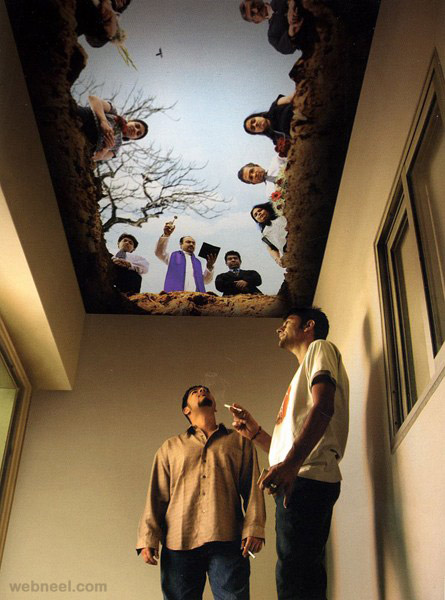
We all know smoking harms us and others, but many do it anyway. There are lots of examples of this in a consumer society. List some others....
2. What other things might be influencing their life choices?
3. What feelings are evoked through the ad? How does the ad try to speak to group of people it is targeting?
Sunday, May 24, 2026
How Wolves Change Rivers

When wolves were reintroduced to Yellowstone National Park in the United States after being absent nearly 70 years, the most remarkable "trophic cascade" occurred. What is a trophic cascade and how exactly do wolves change rivers? George Monbiot explains.
What does it eat?
Wolf
Antelope
Fox
Bear
Beaver
Raven
Song bird
Bald eagle
Muskrat
Mice
Elk
Deer
Salmon
Coyote
Learn 12 words:
12 terms
Watch:
True or False
1. A trophic cascade is an ecological disaster.
2. Wolves were reintroduced to Yellowstone after not being there for a long time..
3. There were not enough deer in the Yellowstone Park
4. The wolves changed the behaviour of the deer.
5. The deer started to avoid the valleys because of the wolves.
6. The birds started attacking the deer
7. The height of the trees started to go down.
8. The bears started to kill each other
9. The rivers became deep and began to flow faster
10. There are now too many wolves in the park.
How Wolves Change Rivers
Fill in the gaps and then check:
Look through the text and underline or highlight examples of
Past perfect simple
Comparatives and Superlatives
How Wolves Change Rivers
One
of the most exciting scientific f___________ of the past half century
has been the discovery of widespread trophic cascades. A trophic cascade
is an ecological process
which starts at the t_____ of the food chain and tumbles a___ the way
down to the bottom. And the classic example is what happened in the
Yellowstone National Park in the United States when wolves were
r______________ in 1995.
Now,
we – we all know that wolves kill various s___________ of animals, but
perhaps we’re slightly less aware that they g______ life to many others.
Before
the wolves t________ up – they’d been absent for 70 years – the numbers
of deer (because there had been nothing to hunt them) had built up and
built up in the Yellowstone
Park and d_________ efforts by humans to control them they’d managed to
reduce much the v____________ there to almost nothing. They had just
g_________ it away.
But as soon as the wolves arrived, even though they were few in number they started to have the most remarkable e_______.
First,
of course, they killed some of the deer but that wasn’t the major
thing. Much more significantly, they r___________ changed the behavior
of the deer. The deer started
avoiding certain parts of the park – the places where they could be
trapped most easily – particularly the valleys and the g________ and
immediately those places started to r_____________. In some areas, the
height of the trees quintupled in j____ six years.
Bare valley sides quickly became forests of aspen and willow and
cottonwood. And as soon as that happened, the birds started m________
in. The number of songbirds and migratory birds started to increase
g_________. The number of beavers started to increase
because beavers like to eat the trees. And beavers, like wolves, are
ecosystem engineers. They c_______ niches for other species. And the
dams they built in the rivers provided h__________ for otters and
muscrats and ducks and fish and reptiles and amphibians.
The
wolves killed coyotes and as a r________ of that, the number rabbits
and mice began to r_____ which meant more hawks more weasels more foxes
more badgers. Ravens and
bald eagles came down to feed on the carrion that the wolves had left.
Bears f___ on it, too. And their population began to rise as well partly
also because there were more berries growing on the regenerating
shrubs. And the bears r__________ the impact of
the wolves by killing some of the calves of the deer.
But h_____ where it gets really interesting.
The
wolves changed the behavior of the rivers. They began to meander less.
There was less e_______. The channels n_________. More pools f_________.
More riffle sections.
All of which were g______ for wildlife habitats. The rivers changed in
r_________ to the wolves. And the reason was that the regenerating
forests stabilized the b______ so that they collapsed less o_____. So
the rivers became more fixed in their c_______.
S___________,
by driving the deer o____ of some places, and the vegetation recovering
on the valley side, there was less s____ erosion because the vegetation
stabilized
that as well. So the wolves, s______ in number, transformed n___ just
the ecosystem of the Yellowstone National Park – This huge area of land…
b___ also, its physical geography.
Pronunciation focus
ly
particularly
similarly
immediately
slightly
dipthongs
stabilized
trophic
erosion
Yellowstone
v
vegetation
valley
wolves
recovering
Second syllable stress
effects
regenerating
transformed
erosion
immediately
particularly
ju:
reduced
reintroduced
huge
population
Saturday, May 23, 2026
Te Ika a Maui - The North Island
A number of
New Zealand places are named after the story of Māui fishing up the North
Island, with the South Island as his canoe and Stewart Island its anchor. This
map is oriented as Māori traditionally perceived the country, with the North
Island below the South Island.
Spirits Bay - Kapowairua
The bay has two Māori names, Piwhane and Kapowairua, the latter meaning to "catch the spirit", derived from a Māori language saying that translates into English as: "I can shelter from the wind.
Kapowairua campsite
Hokianga car ferry
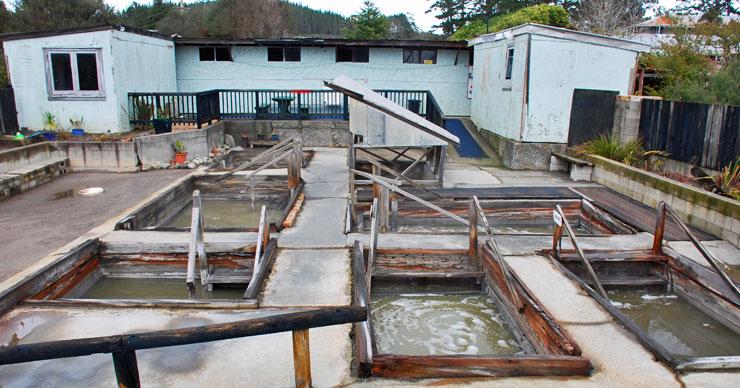
Ngawha Springs
A place where warriors once relaxed after battle campaigns.
Ngawha (the springs)
This sign announces what goes on at Whananaki.
Whananaki - the road less travelled

Whananaki on a busy day
Great Barrier Island - Aotea.
You seriously want to go here. You can fly and it's relatively cheap.
Aotea / Great Barrier
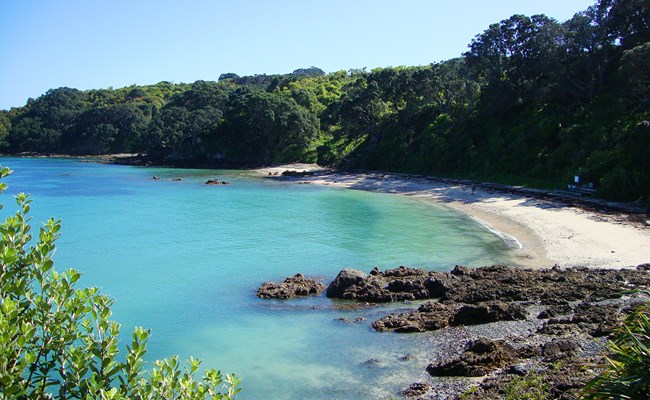
Tiritiri Matangi - birds
Tiritiri
Pakiri - spooky beauty
Pakiri holiday park
Horse treks

Whatipu - raw beauty
Whatipu Lodge
The Whatipu Dances


The Pinnacles - Coromandel - hard walk,with rewarding views, hot springs on the way home
The Pinnacles

Hoffman's pool
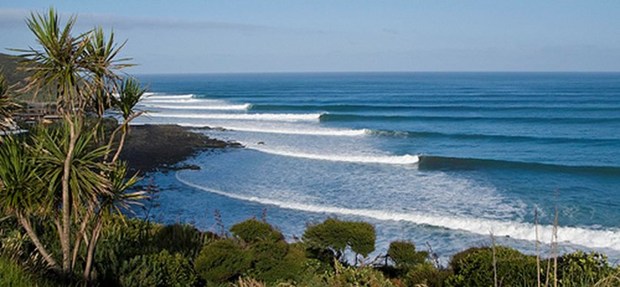
Raglan - surfers will understand this picture
Raglan visitors centre

Kawhia
Things to see and do in Kawhia
 Rotoiti
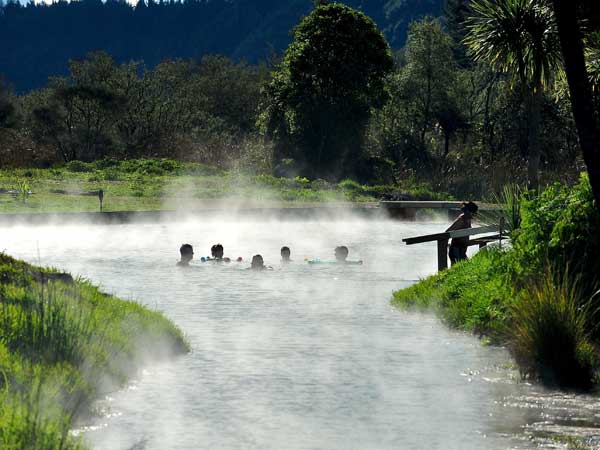 The hot springs near Lake Rotoiti - truly magical
Waitangi soda springs
Whakatane - Mataatua country
Muriwai's cave
Whakatane
Te Kaha (strength) - Tai Rawhiti (the east side)
4 reasons to escape to the cape
Lake Waikaremoana - walk around the lake
Walking the lake
Gisborne -Tai Rawhiti (east side)
Things to see and do in Gisborne
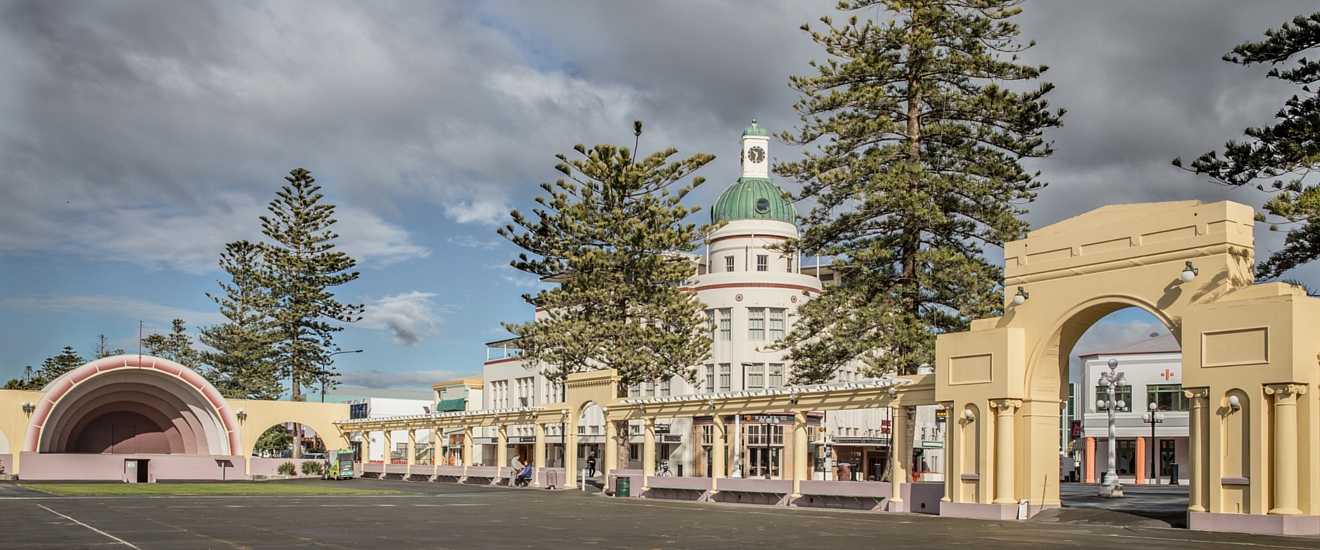
Napier - Deco capital of NZ
Things to see and do in Napier
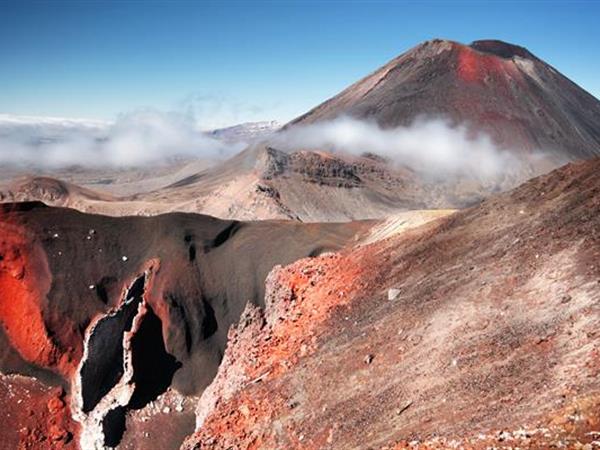
Tongariro
The crossing

New Plymouth - Taranaki (or the Naki)
Visit New Plymouth

Len Lye
Colour Box
Taranaki summit track
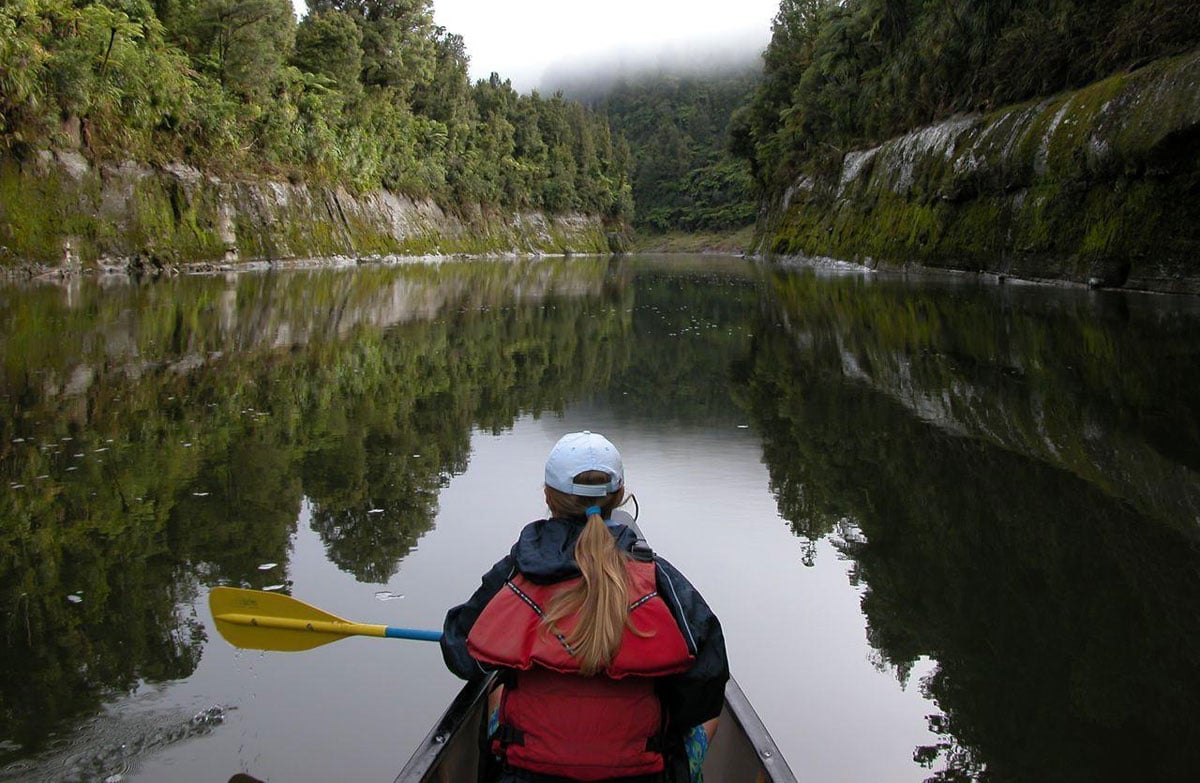
The Whanganui River
The story of the Whanganui river
Explore the Whanganui
Kapiti Island
Kapiti tours
Wellington
Discover Wellington
Task:
1. Use your device or a class iPad to investigate one or two of these places.
Transport: How do you get there? How do you get around the region?
Accommodation: What are the options?
Activities: kayaking? Walking? Fishing? Hot springs?
Things to see: volcanic activity, native birds, whales, architecture, marae etc?
Food: Places to eat and drink?
Shopping: any interesting stuff to buy?
Culture: are there museums, historical sites etc?
Time of year: Is this a good time to go there?
2. Come together as a class and share what you've learned.
Raglan - surfers will understand this picture
Raglan visitors centre
Kawhia
Things to see and do in Kawhia
Waitangi soda springs
Whakatane - Mataatua country
Muriwai's cave
Whakatane
Te Kaha (strength) - Tai Rawhiti (the east side)
4 reasons to escape to the cape
Lake Waikaremoana - walk around the lake
Walking the lake
Gisborne -Tai Rawhiti (east side)
Things to see and do in Gisborne
Napier - Deco capital of NZ
Things to see and do in Napier
Tongariro
The crossing
New Plymouth - Taranaki (or the Naki)
Visit New Plymouth
Len Lye
Colour Box
Taranaki summit track
The Whanganui River
The story of the Whanganui river
Explore the Whanganui
Kapiti Island
Kapiti tours
Wellington
Discover Wellington
Task:
1. Use your device or a class iPad to investigate one or two of these places.
Transport: How do you get there? How do you get around the region?
Accommodation: What are the options?
Activities: kayaking? Walking? Fishing? Hot springs?
Things to see: volcanic activity, native birds, whales, architecture, marae etc?
Food: Places to eat and drink?
Shopping: any interesting stuff to buy?
Culture: are there museums, historical sites etc?
Time of year: Is this a good time to go there?
2. Come together as a class and share what you've learned.
Ngawha Springs
Whananaki on a busy day
Tiritiri Matangi - birds


Whatipu - raw beauty

The Pinnacles - Coromandel - hard walk, with rewarding views, hot springs on
the way home

Raglan - surfers will understand this picture

Kawhia

Rotoiti
Napier - Deco capital of NZ

Tongariro
New Plymouth - Taranaki (or the Naki)


The Whanganui River

Subscribe to:
Posts (Atom)