Friday, November 11, 2022

B2.1 Unit 3: Finance and Money

Aims

1. Watch, discuss and learn language from a news story about inequality among New Zealand children.

2. Listen for specific information when people talk about the cost of living in a foreign country.

3. Compare and discuss the cost of living in various countries using fewer and less.  

4. (PPT lesson) Watch and learn vocabulary and grammar from a video about being money-wise.

5. Scan for key words in a reading about financial services.

6. Write a formal letter asking for more information.

7. Plan, create and present a monthly household expenditure table.

8. Watch and discuss a Ted Talk about UBI or the Universal Basic Income.

9. EF Class - Community Project. Develop at discussing pros and cons.

Listening - P30

Vocab:

disposable income
frugal (adj)
language barrier


Grammar:

Find examples of comparative language in the transcripts 


Group Discussion - P31

draw up a list of basic needs
Discuss what makes the cost of living more or less affordable
discuss how we can make society fairer


Language Builder - P32

Important: at a good price / bargain / discount, on sale / for sale, in debt


Grammar 1 - P33: Fewer and Less (Count and non-count nouns or noun senses)

1. Would you use fewer or less?


people
time
times
cost
costs
security
financial problems


Reading P 34-35

Let's do the reading HW:

Answers:

C)


1. A
2. B
3. A
4. C
5. A
6. C
7. B
8. B

F)

1. B
2. C
3. B
4. C
5. A
6. A
7. B
8. C
9. A


Review of general language we've been learning:

Adjective - noun collocations


Language Builder - P37: Phrasal verbs (money and banking)

close down
give away
cut back (on)
go on
pay back
save up
sign up
take on
write off

Listening vocab:

well off (adj)


Grammar 2 - P38: Clauses of concession: although, despite etc...

Your friend calls you in the middle of the night. She's upset and wants a long chat with you. However you have a big exam in the morning. What do you say?

You're at your favourite restaurant. You get on well with the owner. But today the food was poorly presented and tasteless. What do you say?


Task - P 39

Work in pairs to sort out the best family expenditure plan.


(Upper Intermediate) Wealth Inequality in America


Before watching, answer two questions:

1. What is the ideal wealth distribution in a country? Should it be completely even? Or like the picture above?

2. What is the actual wealth distribution in the USA? Take a guess.

Watch clip:

Wealth Inequality in America

True or false?

1. The Harvard researcher asked people to say how they thought the USA's wealth was spent.
2. The Harvard researcher asked to say what they thought wealth distribution should be ideally.
3. Most people thought that wealth distribution in the USA was not equitable.
4. The actual distribution of wealth in the USA is more unfair than most Americans realise.
5. The top 1% of the USA has %50 of the country's wealth.
6. "Socialism" (everyone has equal wealth) means there is no "incentive" to drive progress.
7. The ideal wealth distribution gives people an "incentive"
8. The actual wealth distribution shows a healthy middle class.
9. The top 30% of people are better off in the actual system.
10.10% of the USA has 40% of the nation's wealth. 
11. 8% of the USA has 70% of the nation's wealth.
12. A CEO works 380 times harder than a janitor. 

Thursday, November 10, 2022

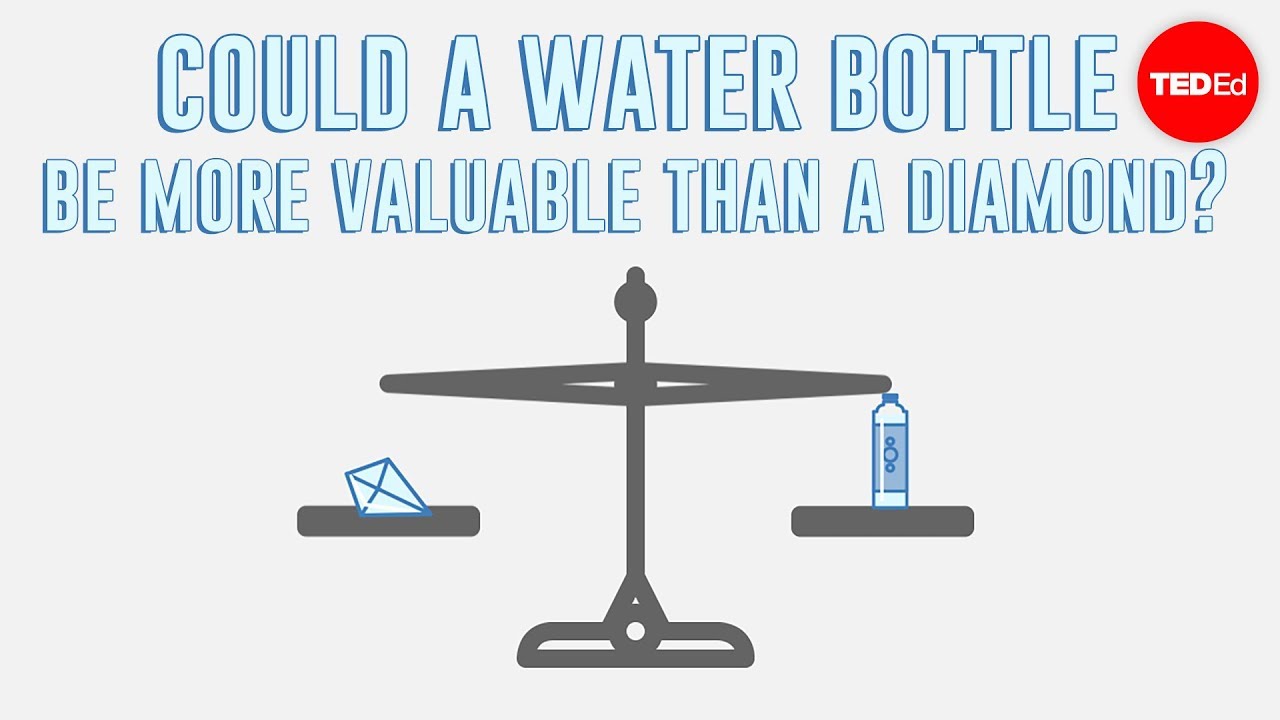
(Advanced) The paradox of value


Watch:

The paradox of value


A

Listen then explain these things to your partner:


Desert

"Exchange" Value

Later time

Opportunity cost

"Marginal" utility

The law of diminishing marginal utility

Maximise utility


B

Listen then explain these things to your partner:


Game Show

Adam Smith

"Use" value

Current situation

Utility

Burden

All decisions

The ultimate source of value


Collocations


Quizlet recap

Friday, November 4, 2022

B2.1 Unit 2: Differences


Image result for cultural differences


Unit objectives:

Read about family and friendships in the internet age
Listen to a discussion about gender equality in the workplace
Discuss the differences between modern life and life in the past
Write an essay about social networking
create a cultural awareness guide for international visitors

Grammar:

Reported speech
Used to / would

Vocabulary:

Words and phrases related to gender, everyday life, cultural differences


P18 - Reading

go beyond
blood relations
prevalence
partially
to blame (adj) for something
immediate family
sibling
bound by blood
branch out
to earn a spot
an only child
enlightening
sealed by blood
fierce loyalty
traumatic
to forge friendships
the jury is still out
to creep

24 phrases


P20 - Writing

As a class discuss these statements:


Social media platforms...


are good for people who are shy
help families stay in touch
help you to become friends with people you wouldn't otherwise
make it harder for real friendships to develop
are a way for businesses to make money out of your private information
interfere with work or study
expose you to hackers
expose you to bullying and negative interactions


Do you know how to use the following phrases?

On the one hand
On the other hand
all in all
To begin with
However
There is also the matter of
not only X, but also Y
in the sense that


P 21 - Language Builder

boss
comparison
dual career
hectic
housewife
occupation
part-time
secretary
stay-at-home dad


Discussion questions:

1. Would you be able to cope with a hectic job?
2. What are the advantages/disadvantages of a part-time job?
3. If you worked for a large company, would rather be a manager or a secretary? why?
4. Would you like to be your own boss?


P 22 - Grammar 1: Reported Speech


argue
maintain
note
claim
remark
state
warn
advise

What do these verbs have in common?

What if we use them like this:

Subj + verb + (that)

Why is it so easy to mix up "say" and "tell"?!

____ "hi"

____ a joke

____ whether you're coming.

____ whether some is sad or happy.

____ sb what to ____

____ what you want.

____  a lie

____ yes or no.


Who said it?

He said that all that we are is the result of what we have thought.

He said that he had no special talent and that he was only passionately curious.

She said that if you judge people, you have no time to love them.

He said that the future belonged to those who prepared for it today.

He said that the unexamined life was not worth living.

She said to turn your wounds into wisdom.

He said that you have power over your mind - but not over outside events.

She said it was better to absolutely ridiculous than absolutely boring.


Marilyn Monroe, Albert Einstein, Marcus Aurelius, Oprah Winfrey, Malcolm X, Mother Theresa, The Buddha, Socrates.


P 23 - Listening

What is gender equality?

We've come a long way
We have a long way to go


P 25 - Phrasal verbs

carry on
cut off
ease off
frown on
get over
leave out
move on
put up with
settle down


Which of these were used in the listening? Check the transcript (p77-78)


P 26 - Grammar 2: Used to and Would

Here are some real facts about my past...

I used to have snowy white hair.
I used to live in Melbourne, Australia.
I used play in a band called Spacesuit.
I used to be a vegetarian.

Could I use the word "would" instead of the phrase "used to" for these sentences?

Here are some more facts about my past...

When I was a kid, I would climb on the roof of my house.
When I was in my twenties, I would easily get into arguments.
When I a kid, my sister would sometimes give me $2 to go to the fish and chip shop. $1 was for her chips, and the other was for mine.

Could I use "used to" in these sentences? Why didn't I?


P 27 - task

Discuss

What is cultural awareness?
Are people in your country particularly culturally aware?
Would it be hard to be from a minority culture in your country?
Many New Zealanders are quite proud of being culturally open. Do you agree that they are?
Have you made any discoveries about other cultures since you came to EF Auckland?


Stereotypes in ads

 Advertising


What is a spoof? 


What's the difference between something that makes fun with stereotypes and something that exploits and perpetuates stereotypes?


White washing


Discuss the complexities of this advertisement.


"Smack and Cheese"


Burgerfuel Narcos spoof


BurgerFuel's latest campaign has come under fire from members of the Latin American community who say the advertising perpetuates negative stereotypes and capitalises on the drug war.
Advertising for the new Smack and Cheese burger plays on the word "smack" - slang for heroin or cocaine. It is themed around Colombian drug lord Pablo Escobar, the drug war and drug smuggling in South America.
A video advertising the burger is filmed in Spanish and features a Pablo Escobar-like character threatening and bribing soldiers as he attempts to smuggle "smack", which turns out to be macaroni, through the countryside.

Green Party candidate, Ricardo Menendez March, said he was concerned the campaign perpetuated negative stereotypes about the Latin American community, particularly that they are drug dealers.
"Latin Americans across the world already have to deal with commentary around the drug war and for many Latin Americans who come from violent areas, the drug war is quite close to us," he said.
"Some of us have friends and family members and acquaintances who have died as a result, and so to have to put up with those stereotypes can be really demoralising."
Following the election of US President Donald Trump - fuelled by anti-immigration sentiment, particularly targeting the Latin American and Muslim communities - such advertising could normalise some of the negative stereotypes the campaign was built on, Menendez March said.
"The Latin American community is rich in diversity and has a plurality of voices. Companies should not be exploiting narrow stereotypes for profit's sake."
BurgerFuel is yet to respond to repeated requests for comment.
Lorena Cuervo has been in New Zealand for two years and says since arriving she has been typecast when mentioning she is from Colombia.
"The following sentence is always related to cocaine: 'good stuff', 'oh! Yes, Pablo Escobar', 'did you bring some stuff to New Zealand?'," she said.
"I don't know why people think that it's funny, or even friendly, they obviously do not know the sadness and pain behind that. They ignore completely that in my country there are children without parents, parents without children because of the war."
Hearing things like this made you feel terribly discriminated against, she said, and seeing these messages in the media encouraged and even sanctioned this stigma.
"I know some people who would rather say that they are from another country instead of hearing those comments."
She believed it was inappropriate for BurgerFuel to use references to the drug war and the trade of cocaine in its advertising.
Menendez March thinks BurgerFuel has a responsibility to play a role in not inciting prejudice and racism.
"An acknowledgement from BurgerFuel that the ad was built upon some pretty negative stereotypes from a war that has cost thousands of lives in the Latin American region would be a start."

• Written by Sarah Murphy

Discuss the comments from the text:


1. "Latin Americans across the world already have to deal with commentary around the drug war and for many Latin Americans who come from violent areas, the drug war is quite close to us."


2.  "Following the election of US President Donald Trump - fuelled by anti-immigration sentiment, particularly targeting the Latin American and Muslim communities - such advertising could normalise some of the negative stereotypes the campaign was built on."


3. "The Latin American community is rich in diversity and has a plurality of voices. Companies should not be exploiting narrow stereotypes for profit's sake."


4. "I don't know why people think that it's funny, or even friendly, they obviously do not know the sadness and pain behind that. They ignore completely that in my country there are children without parents, parents without children because of the war."


5. "I know some people who would rather say that they are from another country instead of hearing those comments."


Gender Stereotypes


1. What are some stereotypes you know of about women?
2. What are some stereotypes about men?
3. Where do we learn these gender stereotypes?


Pierce Brosnan Kia Ad


How does the ad use female stereotypes?

What are the two males in the ad like?

What kind of customer do you think the ad is appealing to?