Sunday, September 22, 2019

(Student Writing - B1.3 level) Ojigi - Bow (by Kimie)


Teacher's note: First of all, thank you Kimie. I really admire how brave and determined you are in using my stupid language so expressively and generously. I can't even make one sentence in Japanese so you should be very very proud of your abilities in my language. 

In Japan there's a unique greeting custom: “ojigi”. You may know it a_ “bowing” in English. All Japanese understand how to bow from childhood. It's quite natural. We ___ this gesture not only to greet, but also to apologise and ___ expressing gratitude.

You can see people bowing anywhere, any time. Actually, if you think about it, it's a really funny custom. But we’re not kidding at allOjigi as a custom is expresses truly Japanese values. We express our feelings with a bow.

In general, people bow with respect and a warm mind. One thing that is important is the bowing angle. There are three ____ of different angles which express three meanings.

1. “Eshaku  
This light bow is for informal greeting_ (bowing angle: about 15 degrees). We usually use this standard form instead of saying “Hello!”


2.  Keirei” 
This is a general formal bow. It can express greeting or apology (bowing angle: about 30 degrees).

3. Saikeirei
This deepest bow is highly effective in showing respect or offering a deep apology (bowing angle: about 45 degrees)
Saikeirei is not used very often. Only when needed.

The Japanese place a lot of importance on pleasing others. If you visit Japan, you may notice that people are very friendly and polite there! After leaving, you may want to come back to Japan, and also you might keep on bowing in NZ!

Kimie


Compare the original text: see how many changes you can find.

Uncorrected text

In Japan has a unique greet custom as you may know it called “Ojigi” “Bow” in English
We usually use this gesture so as to greet, not only greeting but also it can be shown apology and expressing gratitude as well.
All Japanese have understood how to bow since we were child. That’s quite natural
You can look at  people who are bowing anywhere everywhere at any time.
Actually, if you think about that…that’s really funny.
But we’re not kidding at all .that’ why Japanese value “Ojigi” as a custom.
All people express our feeling with bow.
In general, people bow with respect and warm mind equally important is bowing angle.
There is three of different angle which mean different degrees of bow has a different mean about three ways of expressing.
*A light bow called “Eshaku” is for informal greeting (bowing angle, about 15 degrees)
“Hello!” usually we use this standard form instead of saying “Hello!”
*The other one a general bow called “Keirei” is formal. 
It can express greeting or showing apology to someone (bowing angle, about 30degrees)
*And one more a deep bow called “Saikeirei”
We think this way should highly effective against showing respect or telling deep apology (bowing angle, about 45 degrees)
We don’t use very often just use it when it’s needed.

People pay a lot of attention to give others satisfaction in Japan
If you visit to Japan, you may notice that People are very friendly and polite there!
After you leaving, you may want to come back to Japan and also you might bow in NZ!

kimie  

Tuesday, September 17, 2019

(Conversation and Grammar - B1) Present Perfect and Past Simple

What is the past participle form of each of these verbs?

buy

be

lose

skip

win

meet

fly

call

raise

write


Play the game "just say yes" in pairs. One player must ask the first question using present perfect. the other player must reply "yes". The next three questions should be asked in the past simple. The other player must try to answer the question, even if it isn't true. The other play must try to guess if their partner is lying or telling the truth.

Sunday, September 8, 2019

(Advanced) The Philosophy of The Buddha

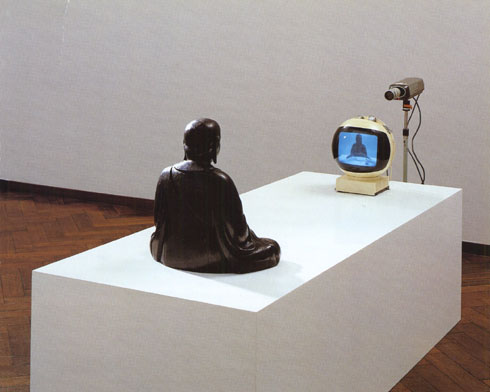
TV Buddha (1974) by Nam June Paik

The Buddha's philosophy teaches us that our desires are at the root of our restlessness - 
and that calm can be achieved through willpower and spiritual exercise.
Go to School of Life clip:

The Philosophy of The Buddha


Where was the Buddha born?


Why did his father keep him isolated?


What four men did Gautama meet?


What does the term "nirvana" refer to?


What does the name "Buddha" refer to?


What unifies all living things, according to Buddhism?


What does the "middle way" allow us to do?


What are the four noble truths?

1.
2.
3.
4.


What is the Noble Eightfold Path? Write the eight aspects of rightfulness on the sides of the octagon:


What about the Eightfold Path often strikes a western observer?

What are sutras?

Where did Buddhism develop during the Buddha's lifetime?

Who is responsible for the spreading of Buddhism across Asia?

Where is Theravada Buddhism followed?

Where is Mahayana Buddhism followed?

What does Buddhism try to teach us about suffering?


Language

Foothills (n)
To be prophesied (pass. vb)
Excursions (n)
Inevitable (adj)
In the midst of (adj phr)
Solace (n)
Enlightenment (n)
Distraught (adj)
To bathe (v)
To abstain from (v)
To cultivate (v)
To transcend (v)
To prompt (v)
Noble (adj)
Outlook (n)
Vain (adj)
To invert (v)
Impulses (n)
A limb (n)
To spur (v)


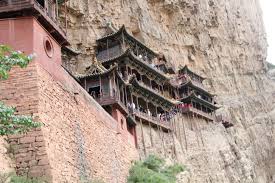
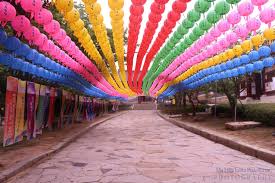
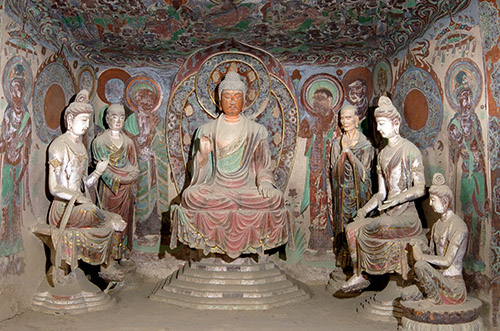
A selection of Buddhist art, temples, shrines and architecture from around Asia. Can you guess which countries?

Kahoot
Da Buddha


Buddha


the former
then called
is a story
between
desperately wanted
imaginable

The story of the Buddha’s life, like all of Buddhism, 1___________ about confronting suffering. He was born  2_________ the sixth and fourth century B.C., the son of a wealthy king in the Himalayan foothills of Nepal. It was prophesied that the young Buddha — 3__________ Siddhartha Gautama — would either become the emperor of India or a very holy man. Since Siddhartha’s father  4_________ him to be 5__________, he kept the child isolated in a palace with every  6____________ luxury: jewels, servants, lotus ponds, even beautiful dancing women.

Cloze

7___ 29 years, Gautama lived in bliss, protected from even the smallest misfortunes of the outside word: “a white sunshade was held over me day and night to protect me 8____ cold, heat, dust, dirt, and dew.” Then at the age of 30, he left the palace for short excursions. 9____ he saw amazed him: first he met a sick man, then an aging man, and then a dying man. He was astounded 10___ discover that these unfortunate people represented normal—indeed, inevitable—parts of the human condition that 11____ one day touch him, too. Horrified and fascinated, Gautama made a fourth trip outside the palace walls—and encountered a holy man, who 12___ learned to seek spiritual life 13___ the midst of the vastness of human suffering. Determined to find the same enlightenment, Gautama left his sleeping wife and son and walked away from the palace 14___ good.

Verb form:

Gautama tried 15 learning / to learn from other holy men. He almost starved himself to death by 16 avoiding  / avoid all physical comforts and pleasures, as they 17 did / had done. Perhaps unsurprisingly, it did not bring him solace from suffering. Then he thought of a moment when he was a small boy: 18 to sit / sitting by the river he’d noticed that when the grass 19 was cut / cut, the insects and their eggs trampled / were trampled and destroyed. 20 To see / Seeing this, he’d felt compassion for the tiny insects.


Reflecting on his childhood compassion, Gautama 21 was feeling / felt a profound sense of peace. He ate, meditated under a fig tree, and finally 22 reached / had reached the highest state of enlightenment: “nirvana,” which simply means “awakening”. He became the Buddha, “the awakened one”.

Sunday, September 1, 2019

C1.2 Unit 6: Story sketches

Stories usually have the following things:

1. An exposition (sets the scene, introduces the characters)
2. An inciting incident (something happens to get the ball rolling)
3. A development (things get more complicated)
4. A secondary plot line or a new character who comes into the story.
5. A climax (a dramatic scene where some of the problems are reverse or resolved)
6. A resolution (some other things get resolved to wind the story down - there might be a twist here)
7. An ending (it could have twist too)

A story needs to hold something back from the reader. For example there might be a vital piece of information the reader or view doesn't find out until later.

Read these story sketches and think about how they could be developed or rewritten.


The Campfire

Long ago in a run-down cave, two cavemen, Uu and Aa, were sitting next to a campfire to hide from the cold winter wind outside. Uu wasn't feeling so good as he had eaten a rotten dodo the day before. As he turned away from the campfire to get some tea he said "uuuu" and farted into the flames. There was a large explosion as the fart caught fire. Aa immediately ran out of the cave yelling "aaaa!".

Meanwhile a man dressed in a suit, the manager of a nearby theme park, was sitting in his office. At the moment of Uu's fart, he felt an earthquake and saw the park's ferris wheel wobble. Suddenly, it began to topple and then fell flat on the ground below, crushing scores of people. Immediately a fire broke out. Then Renzo woke up, glad that it was all merely a dream.


Aladdin in Ancient Egypt

Once upon a time in Ancient Egypt, Cleopatra was lying in bed, patting her cat Sir Toby. It was early in the morning. Suddenly Sir Toby began to choke. Cleopatra called her servant: "Quick! Sir Toby is dying!". However, no one came to help her. The Egyptian queen went into a panic. She didn't know what to do!

Meanwhile in another part of the city, Aladdin was smoking pot and watching morning TV - Teletubbies - as was usual for him on Tuesdays. Suddenly Cleopatra's cries for assistance came through the TV set. According to ancient historians, Cleopatra was actually quite ugly, but had a most beautiful, charming voice. And so Aladdin became enchanted and hopped straight onto his magic carpet. 


The Ballad of Juan-Carlos

It was during a long freezing winter in a bar called Seven Steps to Heaven, and it was one of those nights peaceful nights when the crowd gets wild and crazy on heavy metal. So everything was pretty mundane.

Suddenly, a big shadow appeared at the threshold of the club. No one could see who it was, but no sooner had the dark shadow stepped into the light than the entire bar was on fire: Bikini  Babes started to fly around, flowers began to sing, dolls passed out and donkeys danced the Macarena. For Juan-Carlos, the most famous teddy bear of the century had arrived. Juan-Carlos was wearing only underwear, revealing his breathtaking abs.

But while everyone was admiring him, there was one person who didn't seem impressed. It was a German radio active flower called Radio-Active Flower.

Flower approached Juan-Carlos and said: "Ich bin eine flower, ich know di bist ein porn star in the past! So pay me in alcohol recht now! Or ich will publish dis porn video of du on the 15 TV screens in dis bar!"

Juan-Carlos answered: "Fiend! I have no choice but to bow to your wicked will! Bartender! A create the your best champagne for the senorita!"

But as Radioactive Flower was a true criminal, she published the videos anyway!

Now the whole bar became a scene of diabolical destruction and mayhem. There was blood, chairs flew through the air, glasses were smashed onto heads, needs were driven into eyeballs. Juan-Carlos had his legs and arms torn off by Bikini Babes.

Suddenly a meteorite crashed into the bar, killing everyone.


C1.2 Unit 6 Project

Create a live story - work in small groups

1. IDEA. Think up an idea as a team.

2. CHARACTERS. Develop your characters a little. Remember the number one rule of comedy: find the flaw and play it up. In other words, exaggeration is OK.

3. PLOT. Develop the plot a little. Remember the basic pyramid shape of a story: exposition, development, climax, resolution. Can there be some "buts", "sos" and "meanwhiles" (different threads) to make the story more complex? Can you introduce a new character at some point?

4. TWIST. Does your story have a good one? Can you add anything into the story that will make the twist funnier or more dramatic?

5. TWEAKING. Once you have your basic story and characters, go over it and tweak it, adding some little surprises and details to make it as entertaining as possible.

6. OPTIONS. Look for some IMAGES you can use as a backdrop of your story. Can they communicate locations or emotions in a dramatic or humorous way? Add MUSIC or sounds to your story too, but don't make it too technical. You could also use PROPS or COSTUMES if they add humour or interest.

8. REHEARSE.

9. PERFORM.


(Advanced) Elements of Surprise: Our Mental Limits and the Satisfactions of Plot

Image result for Elements of Surprise: Our Mental Limits and the Satisfactions of Plot.

Vera Tobin is a professor in cognitive linguistics and is fascinated by our fascination with unexpected plot twists. She reveals what's going on in our brains when stories take us in unexpected directions in her book,  Elements of Surprise: Our Mental Limits and the Satisfactions of Plot.

Elements of surprise


Listen from 4:30 - 7:20

Why are we "on safe ground" talking about the film Sixth Sense?

What is the twist in Sixth Sense?

What happens at the beginning of Sixth Sense?

What does Vera mean by "wiggle room"?


Listen from 7:20 - 8:50

Listen and then try writing out what Vera has said here about the two things that make a plot twist gratifying?

One thing is that                                 doesn't just                                but                                          .

The other thing is that not that                                                             but that


Listen from 11:00 - 1315

Once you know the answer and you look back, ___  ____ ____ ______ it in a new light, ____ you say it ____ seems so obvious.

The basketball video.


Listen from 13:15 - 16:45

Besides the plot twist, what is the other kind of twist?

Why are Sherlock Holmes stories sometimes "a bit of a shell game"?


Listen from 18:10 - 19:57

What two things does The Good Place do differently from other shows?

1.
2.

Television can sometimes be ____ more beguiling and surprising to ____ ___ ___ who watch it with an analytical ____.