Saturday, December 29, 2018

(Advanced) The Sounds of the Lofoten Islands


Image result for lofoten islands

Wildlife sound recordist Chris Watson accompanies Sami Joiker, Andé Sombe, on a journey up a mountain on the Lofoten islands in Norway to explore the relationship between the sounds of the mountain, the people and the wildlife.

As Chris discovers, for many Norwegians the soundscape is part of the fascination and attraction of the mountains. The mountains offer an escape from urban and man-made noise to Nature’s symphony which is composed amongst other things of the sounds of running water produced by the glacial streams, the whisper and roar of the wind, the chorus of song birds and the cry of soaring ravens high overhead.

Looking around Chris is reminded that this is an Arctic landscape but in recent years the glacial ice has been melting in some of Norway’s highest mountains and we learn how a team of archaeologists have been recovering thousands of artefacts, some of which date back 6,000 years.

But it is also the quality of the sounds here that intrigues Chris, and during the climb gradually he begins to understand something of the deeper more spiritual connection with the earth which is so intrinsic to the Sami culture.

For Andé the mountain soundscape and his relationship to the wolves which were once so prevalent here, inspires a joik, a Sami chant, which he performs at the peak of their climb.


(Advanced) The Sounds of the Namib Desert

Image result for The Sounds of the Namib Desert


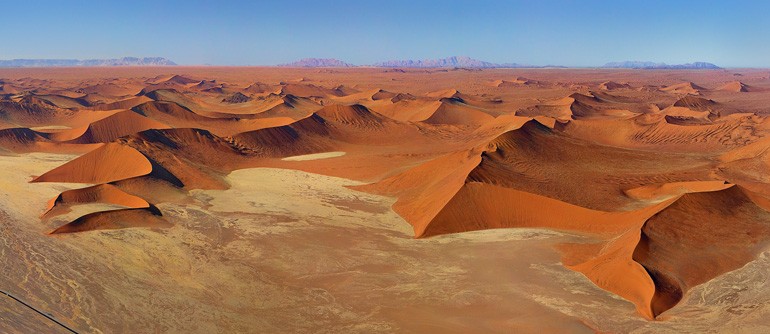
Beginning with a few solo notes from a group of birds (including sparrow doves and finches) before the first light of day and ending with the sounds of the wind in the darkness of the night, wildlife sound recordist Chris Watson presents a journey in sound from dawn to dusk in the Namib Desert in southern Africa.

The Namib is dominated by two features; the sand and the wind. Both of these are constantly shifting and changing and so too are the sounds they produce. The wind is hugely significant to the local community, the San, for whom it is linked with ideas of the spirit and breath of life and with scents and smells. The wind is a carrier of messages. There are good winds and bad winds. The sounds carried on the wind are an aural guide to life in the landscape.

The wind of course carries other sounds with it, and as on the Plains (the first programme in this series), local people use sound to survive here; to identify the whereabouts of predators and prey.

What is also fascinating about the desert are the micro-sounds that you can hear, including sand grains being blown by the wind, ants scurrying inside an acacia tree, and the slither of a side-winder snake as it buries itself in the dune. Then there are louder sounds, like the Namaqua Sandgrouse which gather to drink and bathe, or the night chorus of barking geckos; small reptiles that live in individual burrows which they use to amplify their songs, which then ring out across the desert and into the night.

And all the time, there is the wind, the sand and the eerie shifting sounds of the dunes.

The Sounds of the Namib Desert

(Advanced) The Sounds of the Maasai Mara

Related image

From the moment “you wake up in the morning ...you become aware of sounds, the sounds of Africa“ says Saba Douglas Hamilton, a conservationist who was born and brought up in the Great Rift Valley.

In the first of four programmes, wildlife sound recordist Chris Watson guides us on a journey in sound across the Plains to hear the world as you’ve never heard it before and explores the relationship between the soundscape, the people and the wildlife. The great savannah wilderness of the Maasai Mara in Kenya is filled with sound even before the sun rises above the horizon. There are the sounds of the wildlife and the elements; the wind and the rain.

Sound is used by animals to communicate with one another, to attract a mate, and warn off predators. Being able to interpret this soundscape is as important to the animals who live here as the people.

From a very young age Saba has been aware of the changing soundscape around her. And as we discover, for both Saba and Jackson Looseyia, a local Maasai, being able to identify the individual sounds in this changing soundscape is crucial to their survival; for example, recognising the alarm calls of a bird when a predator is nearby.

And it is not only the sounds of the wildlife that fill these plains but also the elements - the wind and the rain. The rains “mean life” explains Saba as vast herds of wildebeest follow the rains on their annual cycle in search of food.

We also hear about the signature sound of Africa – the roar of a lion. But for Chris Watson, the most memorable sound was of elephants sleeping; a sound which you feel as well as hear!

The Sounds of the Maasai Mara