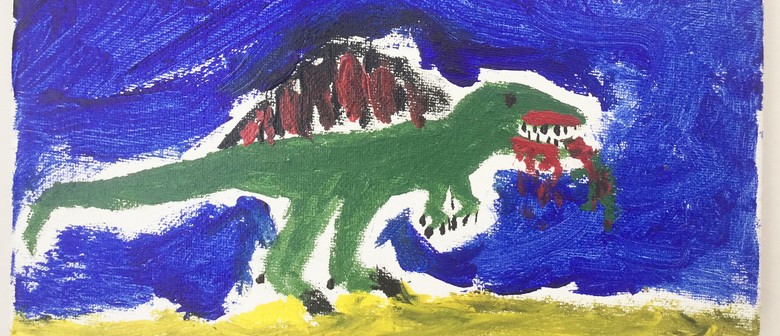
Like many people, Amelia Harris loves op-shopping for treasures. She
spent the past year scouring North Island op shops for amateur art works
for a collection now on show in Auckland.
In Amelia’s view, 'amateur art' is made either purely for the love of
it and/or by someone “a bit inept”. What amateur artists specialise in,
she says, is the depiction of pure joy.
Amelia's has always had an eye for original art in op shops (the most
she'll pay is around $14). When the works started piling up in her
hallway she realised a collection was developing. It was then time to
work out the names, titles and descriptions, but in many cases she got
nowhere.
'Amateur Love' is at Depot Art Space in Devonport until 2 November.
The new Lighthouse sculpture by Michael Parekowhai on Auckland's Queens Wharf. Photo / David St George / Auckland Council
The interior
Vocab Preview
commission
waterfront
site
to lay out
scale
disembarking
vessels
integral
on a human scale
state houses
to undertake
era
tongue and groove
to mill
to allude
Real Estate
commodities
of modest means
An artist's "gesture"
ethos
a trophy
pose
heroic
childlike
triumphantly
brooding
signify
hemisphere
star constellations
neon
installation
a king tide 'insider' knowledge
universal ideas
introspection
The Objectives
When Auckland artist Michael Parekowhai first got this commission, he visited the waterfront site and spent some time thinking about what would best suit it and meet the objectives laid out for the work:
•it had to be eye-catching and with the scale and power to draw people to Queens Wharf,
•be accessible, dynamic and interactive
•have wide appeal and draw repeat visits to the Auckland waterfront
•be the best of its kind, complement Queens Wharf's visual and exposed natural environment
•welcome people to Auckland and the waterfront, including those disembarking from cruise vessels
•be integral to defining the identity of "the people's wharf".
At the end of this field trip, we will decide if the artist has successfully met these objectives. But let's keep an open mind for now.
Discuss:
Before reading on, why do you think he chose to create this kind of house for the artwork?
The House
Extract from a newspaper article:
"Looking across to the North Shore, where Parekowhai grew up, and east toward Bastion Point, he immediately thought of a house - "a simple modest house that everyone would recognise and that had a huge amount of social, political and cultural history."
Thinking about surrounding office and apartment towers, he decided he didn't want to create another tall structure which would compete with existing city buildings. He wanted something on a human scale, which suggested human activity and humanity."
"We read about state houses and undertook practical research, driving around Auckland, photographing details." - Michael Parekowhai
Discuss
1. Are there "state houses" in your country?
2. What era or decade do you think this style of house comes from?
3. The artist says this kind of house has a lot of "social, political, cultural history" in New Zealand. What do you think the house says about the New Zealand way of life?
4. If you could represent your culture with a house, what sort of house (or apartment) would you use? What are the typical materials, shapes, features, colours etc? Describe it to a partner.
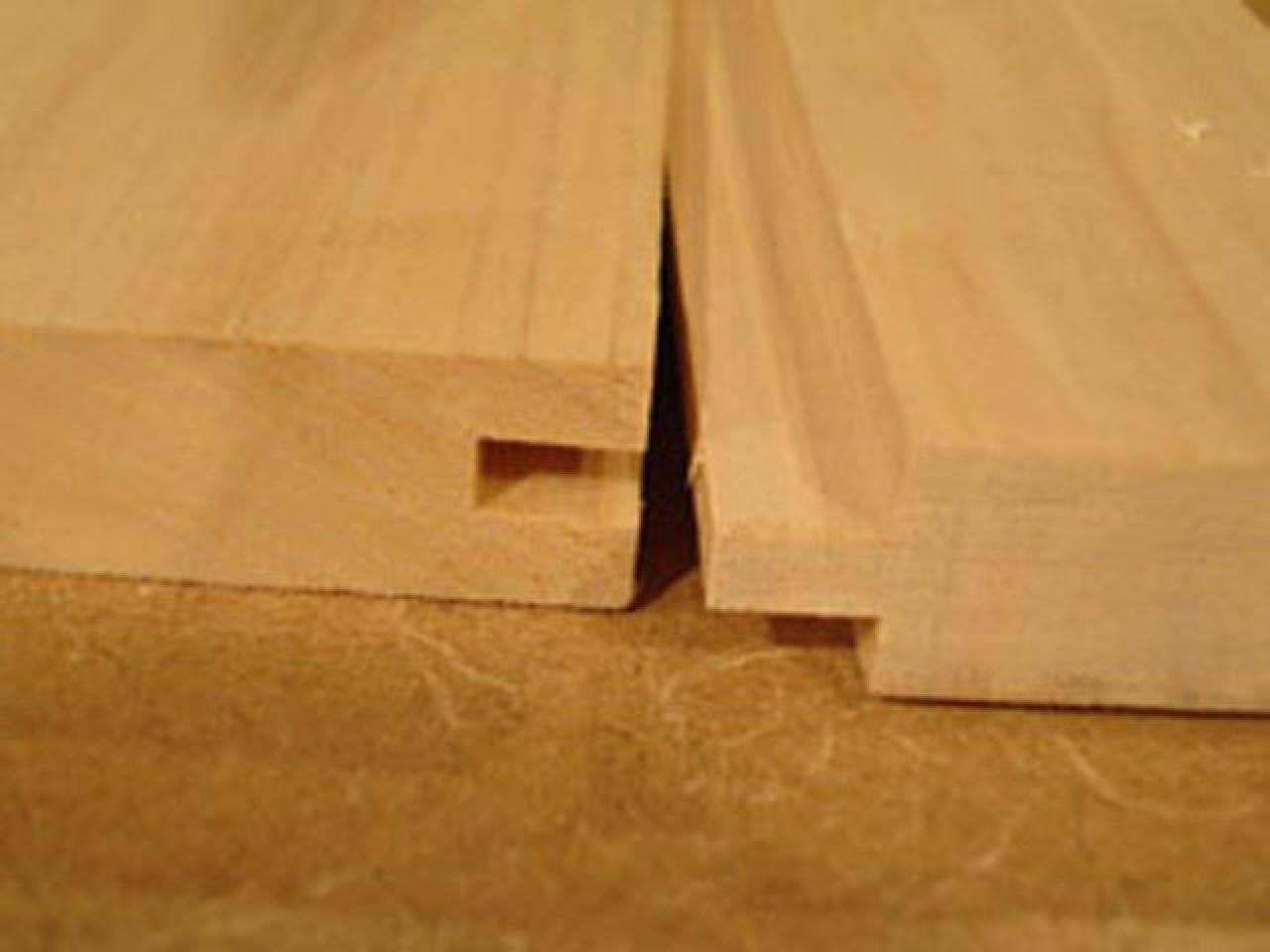
"The external house colours reference the site and environment on Queens Wharf, the colours in the space between the sea and the sky. The colours appear to shift as the light changes, at different times of day and weather. Inside, the tongue and groove floor was milled from black maire, a native timber used by Maori and early settlers. We chose this highly figured wood to allude to mini universes and the water." - Micheal Parekowahai
Discuss:
1. Walking around the house, can you see differences from a conventional home? Has anything been changed or adapted? Why?
2. What does the decking add to how you see the house?
Controversy - a trophy of lost equality?
There was a small group of protestors at the opening of the artwork. Sue Henry of the Tamaki Housing Group, which organised the group of about 10 protesters, said the $1.5m sculpture was "a trophy to Barfoot & Thompson" (The Real Estate company which paid for the sculpture).
In the last century New Zealanders generally expected the State to help them with their education, professional training, health, housing and in their retirement. This is still true to some extent, but over the last three or four decades their has been a shift away from this idea to a more "competitive" model where the idea of state assistance is discouraged. These days education, health and housing are increasingly seen as commodities.
There has been steady economic growth in this period, many people have profited (especially with the increased value of their houses), but many others have been left behind and many feel that inequality is spinning out of control.
The protesters see Parekowhai's use of a state house to celebrate the city as insensitive and arrogant, considering how inaccessible housing is to those of modest means. For them the Auckland "housing crisis" is a result from the state withdrawing from its former role of ensuring a basic standard of living for all. For them the lack of affordable housing in Auckland is a symbol of unacceptable inequality.
But is the artist's gesture as arrogant as they believe? By inserting his "state house" so centrally and visibly into the contemporary cityscape, is he not using the house to remind us of this lost ethos (shared value) of equality?
Is the house a "trophy" of lost equality or is it more a symbol that artist is using to get us to think about parts of our identity we have forgotten?
And let's look at what's inside the house too, because the work is not just an empty house. It's a house that contains memories.
Captain James Cook
Discuss:
1. Who was Captain Cook?
2. Why did he come to New Zealand?
3. Is there an equivalent of "Captain Cook" in your country? Someone with the same kind of status?
Cook's pose is not the heroic one we've come to associate with him. For starters, his feet don't quite touch the floor giving him an almost childlike quality. He's not looking triumphantly out to sea but slightly down, more contemplative and possibly brooding than anything.
Discuss
1. Looking at Cook, why do you think he's been represented this way? Consider the pose, size, materials, surroundings.
The Constellations
Discuss
1. Do you know what Matariki is? When and where can you see it in the sky? What does it's arrival in the sky signify?
"Our place, our history and our culture always play an important role in developing my work. For The Lighthouse, we did research on southern hemisphere star constellations by reading books, looking at star maps, visiting the Auckland Stardome and Planetarium, utilising websites and apps, and looking at our night skies.
"When deciding on constellations to realise in neon and locating them within the house, we were influenced by the position of the stars during Matariki."
2. How does the house affect the way you view the objects inside? How would it be different without the house?
3. Do you notice how by looking inside (the house), you're actually looking outside (at the night sky)? What's the point here?
Technical challenges Discuss: 1. The work was quite challenging to make, technically. How do you think the house and interior installation were assembled and positioned on the wharf?
Answer: The house was built around Cook - there'd be no way to get him through the front door or any of the windows - and the weather caused delays in getting the sculpture onto the site. It had to be taken by barge from a studio on Hamer Street, in the Wynyard Quarters, to Queen's Wharf and a king tide was needed for that. A rainy spring made it difficult to complete painting.
New Zealand Culture?
Discuss:
1. If you hadn't had guidance from a teacher, would the work have meant anything to you?
Shouldn't art be able to speak for itself without an interpreter explaining everything?
Well. Would you be able to understand the carvings in a Maori meeting house without guidance? Would you be able to understand the hieroglyphs in an Egyptian temple or the symbols in a Buddhist temple or an Islamic mosque? Perhaps you can sense the general idea? But to really understand, the way you understand a cool TV show or rap song? Maybe you just understand that stuff because you're already part of the culture that produces it. That is your culture so you don't need someone to explain it to you. Can any cultural artefacts be properly understood without 'insider' knowledge. Isn't that precisely what culture is? The things about us that are not universal, and can only be understood from the insider's perspective. I think Parekowhai is using the house and the objects inside it to get people inside his personal, local, non-universal idea of New Zealand culture. It's significant that you can't actually enter the house. You walk around it, are you locked out? The house represents a society and its contents represent the distinctive memories of a culture. Memories that in some ways are inaccessible to us, or only accessible through introspection.
Judgement
Read though the objectives set out by the commissioners again. Did Parekowhai successfully meet these objectives?
Artist Michael Parekowhai. Photo / Derek Henderson
DNA may be the new preferred way of backing up digital files. Scientists
have figured out how to code files and attach them to DNA cells. The
process holds information longer than any of the disks and drives that
we currently use, but is this really the way to preserve all of
humanity's digital accomplishments for the future?
will be ____ to _____
going to be ______ forever
it won't even ____ as long as paper
to prove their _____
_______ perfectly just like the _______
in the ______ run
they have _____ parts
without ___ your hard drives are _____ to fail
five years if you're _____
environmental ______
little ________ of DNA
the way that this ____ itself to us right now
future ______ are going to have access
there's _____ gonna be a record
you're gonna ____ to delete some shit
It's gonna be around for a _____
for ten thousand years or possibly ______
Discuss: What are the implications of this new technology?
If you'd like to learn more about how this process works watch this clip:
A tangle of poles and ropes that looks like a twitching tent may be the precursor of a future robotic explorer, which would be dropped from a height of 100 km onto Saturn’s moon, Titan, without a parachute.