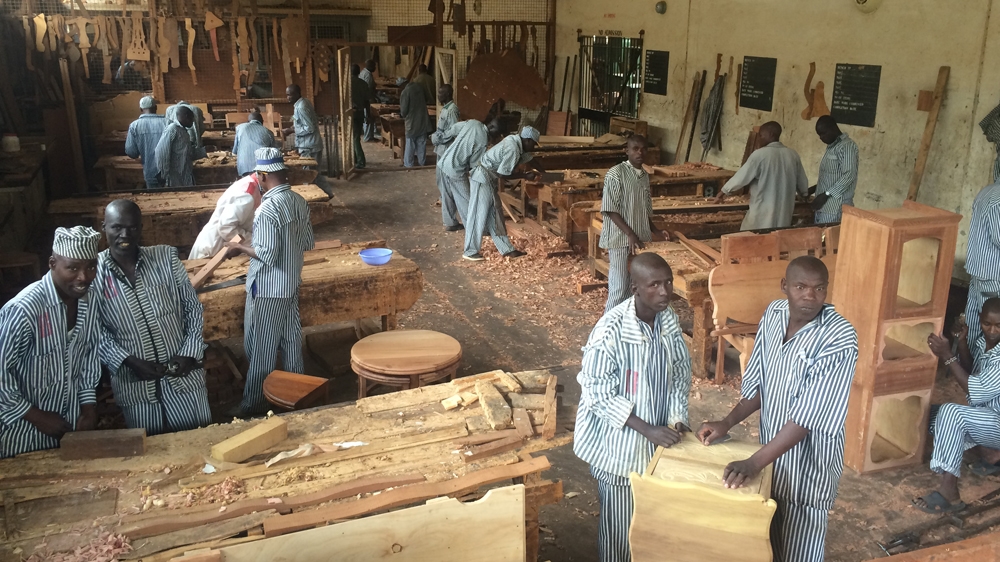
First watch the first 5 minutes only of this TED talk. It gives an idea of Alexander's motivations.
Alexander McLean TED Talk
1. Why was the man Alexander found in the hospital not being treated or cared for?
2. What was the first death row prisoner Alexander mentions convicted of?
3. What was the second inmate convicted of?
4. What percentage of people sentenced with death in Uganda have been estimated to be innocent?
Discuss
Why do you think this is happening?
5:07 - 9:29
Why did Alexander return to the UK?
What conversation has Alexander had many times before?
Why had no one attended to Charles?
Why did Susan kill her husband?
What crime the woman in chains in Sudan committed?
What was the effect of refurbishing the Kampala Prison?
Discussion
1. What is a ‘rebel’?
2. What is a rebellious person like?
3. Why do people end up in jail?
4. Are there some people in jail who shouldn’t be?
5. Should there be schools in prisons? Why / Why not?
Now watch the program about Alexander's prison education scheme:
Prison Education in Kenya
Introduction:
Education _______. The universal _____ to expand ______ and offer better _______ - a _______ to a better life. Yet around the _______ schools and institutions are at ______ point. _______ are deemed to be no longer ___ for purpose. Rethinking what schools are ___ and how they work. Identifying the ____ and ________ needed in the ____ Century. Now a new ____ of ______ education is _______ the world. Rebel _________ are radically _____ the way people learn - challenging the old way and bucking the ______, creating _____ which will affect _________ and entire __________.
Part 1 - Naivasha and Kamiti Prisons
Take notes from the small text captions as you watch and listen:
1. ___ % of people in Nairobi live in shanty towns.
2. Lack of _______ and _______contribute to high levels of crime.
3. APP stands for A_____ P______ P________
4. The official _________ of Kenyan prisons is _______
5. The actual prison population is _________ inmates.
6. Alexander started APP in _____.
7. APP's annual budget is around _________, funded by charitable ________.
8. APP is currently working with ____ prisons.
9. The Principal of the Naivasha Prison School has been an inmate for _____ years.
10. ___ % of Naivasha inmates are in formal education.
11. Prisoners who show academic and _________ potential are encouraged to _____________.
12. Once the prisoners master ________ and numeracy, APP encourages them to study ____.
13. Some inmates are studying for a ____degree through the _________________.
14. As part of their degree, the students are expected to help ____________.
15. Currently ___ Kamiti inmates are studying for a law degree.
16. APP hold _____ courts to give prisoners an opportunity to _______ law.
17. Inmates and staff play all the roles in the courtroom, law students acts as ______.
Discussion Questions: The Africa Prisons Project
- What impressed you most about the prisoners who studied law? Why?
- What difficulties did the prisoners face when they were studying, and how did they overcome them?
- Why do you think learning about the law was important for the prisoners?
- Do you think education can change a person's life? Use examples from the documentary to explain your answer.
- Should prisoners have the opportunity to study and gain qualifications while they are in prison? Why or why not?
- Imagine you could ask one of the prisoners or Alexander McLean a question. What would you ask, and why?
Further material: The transformative potential of prisons in Africa and beyond
Watch:
Alexander McLean TED Talk

No comments:
Post a Comment