Wednesday, July 30, 2025

Jobs - skills and qualities


Discuss in pairs:


1. Would you like to be a teacher?
2. Would you be a friendly teacher or a strict teacher? Why?
3. What makes the best kind of teacher?


Job


Responsibilities
Skills
Qualities


General Questions

Do you think teachers need to be strict to get results from their students?

Is teaching a natural talent? Why are some teachers better than others?

What are the most important subjects for people to be taught in their education?

How will education change in the future?


Think of some questions to ask people who want to become teachers...

1.
2.
3.
4.
5.
6.


Job


Responsibilities
Skills
Qualities


General Questions

Should an office accountant need to dress formally at work? Why?

Would you make a good accountant? Why? Why not?

Will accountants be replaced by AI? 


Think of some questions to ask people who want to become accountants...

1.
2.
3.
4.
5.
6.


Image result for lawyer


Job


Responsibilities
Skills
Qualities


General Questions

What would be the worst thing about being a lawyer?

What would be the best thing?

Does the law always get things right?

What things that are illegal now, will be legal in the future?


Think of some questions to ask people who want to become lawyers...

1.
2.
3.
4.
5.
6.


Image result for mechanic


Job


Responsibilities
Skills
Qualities


General Questions

Do you think being a mechanic would be an interesting job? Why? Why not?

What would be the most fun part of a mechanic's job?
Are mechanics well paid in your country? Why? Why not?
Will there be mechanics in the future or will they be replaced by robots?


Think of some questions to ask people who want to become meachanics...

1.
2.
3.
4.
5.
6.


Job


Responsibilities
Skills
Qualities


General Questions

Why do you think people choose to work in hospitality?
How could a person starting out in hospitality industry grow their career?
Are hospitality workers well-treated in your country? Why? Why not?


Think of some questions to ask people who want to become waiters...

1.
2.
3.
4.
5.
6.


Job


Responsibilities
Skills
Qualities


General questions

Do you have respect for the police in your country?
Do the police sometimes abuse their power?
What would the world be like if there were no police?


Think of some questions to ask people who want to become police divers...

1.
2.
3.
4.
5.
6.


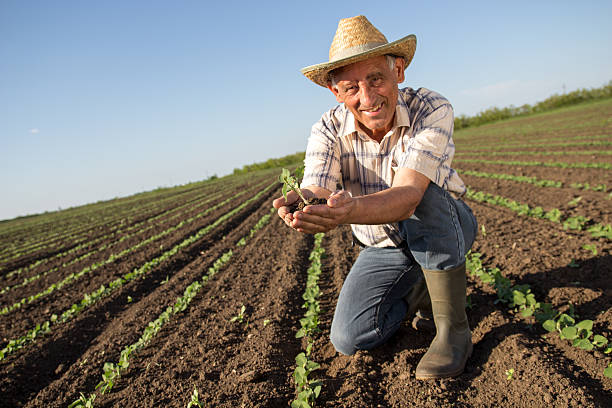
Image result for farmer


Job


Responsibilities
Skills
Qualities


General questions

What are the main forms of agriculture in your country?
What are the challenges for this industry today?
How will agriculture change over the 21st Century?


Think of some questions to ask people who want to become farmers...

1.
2.
3.
4.
5.
6.


Related image


Job


Responsibilities
Skills
Qualities


General questions

Why do you think so many people dream of being a pilot?
Will there still be pilots in the 22nd century? Why? Why not?
Why do pilots have higher status than bus drivers?
Will there be pilots in the future or just AI pilots?


Think of some questions to ask people who want to become pilots...

1.
2.
3.
4.
5.
6.


Job


Responsibilities
Skills
Qualities


General Questions

Do you feel sports have become corrupt?
Did you ever consider becoming an athlete? Why? Why not?
Is athletics a waste of time? What does it achieve?
What sports will become popular in the future?


Think of some questions to ask people who want to become athletes...

1.
2.
3.
4.
5.
6.


Job


Responsibilities
Skills
Qualities


General Questions

Do you think psychology is an important field of work? Why? Why not?
Is mental health a big issue in your country?
Why is there so much poor mental health these days?
Will psychology be more or less important in the future?

Think of some questions to ask people who want to become psychologists...

1.
2.
3.
4.
5.
6.


Job


Responsibilities
Skills
Qualities


General Questions

What is the purpose of music?
Do you think musicians can make good parents?
What do you think music will be like in 100 years?


Think of some questions to ask people who want to become musicians...

1.
2.
3.
4.
5.
6.


IELTS - Identify attitudes and opinions

 Identify attitudes and opinions

Sunday, July 27, 2025

Superstition

"Superstition" 
 

Some words in each line are out of correct order 
 

Very superstitious, on the writings wall, 
Very superstitious, ladders fall 'bout to , 
Thirteen-months-old broke the lookin' baby glass 
years of bad luck, the seven good things in your past 
 
When you understand in things that you don't believe , 
you then suffer, 
ain't superstition the way 
 
Very superstitious, wash your hands and face , 
Rid me of all the problem, do that you can, 
Keep me in a strong daydream, keep me goin' , 
You don't wanna save me, my song is sad 
 
When you don't believe in things that you understand, 
Then suffer you, 
the way superstition ain't, yeah, yeah 
 
Very superstitious, nothin' to say more, 
Very superstitious, his devil's on the way, 
Thirteen-months-old baby broke the glass lookin' , 
Seven years of bad luck, things good in your past 
 
When you don't understand things that you believe in, 
Then you no, no, no suffer,  

ain't superstition the way 


Superstition


The Logical Song

W______ful

b_______ful

m_____cal

s______ible

l_____cal

r______ible

p______cal

d______able

c______cal

i________ual

c______cal

r_______cal

l_____al

f______cal

c_______al

a_______able

r_______able

p_______able


When I was young, it seemed ______ life was so ____________
A miracle, oh, it was ___________, magical
And all the birds in the trees, well they'd ____ singing so happily
Oh, joyfully, oh, playfully watching me

But _____ they sent me away ____ teach me how to be ___________
Logical, oh, _____________, practical
Then they showed me a world ______ I could be so dependable
Oh, clinical, oh, ____________, cynical

There are times _____ all the world's asleep
The questions run too deep
For ______ a simple man
Won't you please, please tell me ______ we've learned?
I know it ______ absurd
Please tell me ____ I am

I said, now, watch ______ you say, they'll be calling you a __________
A liberal, oh, ___________, criminal
Oh, won't you sign up your name? We'd like to _____ you're acceptable
Respectable, oh, _____________, a vegetable


The Logical Song

The Werewolf


The Werewolf is a part of a 'wolf trilogy' by Angela Carter.

Before reading

Recall the story of Little Red Riding Hood.

In which country do you imagine the story takes place? How long ago?
Who are the characters?
What happens at each stage of the story?
How do these themes feature in the story: disguise, family, nourishment, health, temptation?


Grammar


The heroine and the villain (protagonist and antagonist)

Which of these 'c' words describe the Wolf and which words describe Little Red Riding Hood? Protagonist and antagonist may share some traits.

Cunning            LRRH     W
Carefree            LRRH     W
Cowardly          LRRH     W
Charming          LRRH     W
Crafty                LRRH     W
Chatty               LRRH     W            
Curious             LRRH     W
Courteous         LRRH     W
Cold-hearted     LRRH     W
Calculating       LRRH     W
Caring              LRRH     W
Cautious           LRRH     W
Courageous      LRRH     W   
Corrupt             LRRH     W
Clumsy             LRRH     W
Competent        LRRH     W
Clueless            LRRH     W
Colourful          LRRH     W
Consistent         LRRH     W
Childish            LRRH     W
Childlike           LRRH     W


Are there some folk tales from your own country set in the forest?
Do you have stories about werewolves or people who can change into monsters? (metamorphosis stories)
Can you think of other stories which feature metamorphosis?


Read the first four paragraphs of The Werewolf. Who is narrating the story? Does it depict a Pagan or a Christian society?


The Werewolf


It is a northern country; they have cold weather, they have cold hearts.

Cold; tempest; wild beasts in the forest. It is a hard life. Their houses are built of logs, dark and smoky within. There will be a crude icon of the virgin behind a guttering candle, the leg of a pig hung up to cure, a string of drying mushrooms. A bed, a stool, a table. Harsh, brief, poor lives.

To these upland woodsmen, the Devil is as real as you or I. More so; they have not seen us nor even know that we exist, but the Devil they glimpse often in the graveyards, those bleak and touching townships of the dead where the graves are marked with portraits of the deceased in the naif style and there are no flowers to put in front of them, no flowers grow there, so they put out small, votive offerings, little loaves, sometimes a cake that the bears come lumbering from the margins of the forest to snatch away. At midnight, especially on Walpurgisnacht, the Devil holds picnics in the graveyards and invites the witches; then they dig up fresh corpses, and eat them. Anyone will tell you that.

Wreaths of garlic on the doors keep out the vampires. A blue-eyed child born feet first on the night of St John's Eve will have second sight. When they discover a witch--some old woman whose cheeses ripen when her neighbours' do not, another old woman whose black cat, oh, sinister! follows her about all the time, they strip the crone, search for her marks, for the supernumerary nipple her familiar sucks. They soon find it. Then they stone her to death.


Read on. In what ways is this a story of metamorphosis? Who transforms?


Winter and cold weather.

Go and visit grandmother, who has been sick. Take her the oatcakes I've baked for her on the hearthstone and a little pot of butter.

The good child does as her mother bids - five miles' trudge through the forest; do not leave the path because of the bears, the wild boar, the starving wolves. Here, take your father's hunting knife; you know how to use it.

The child had a scabby coat of sheepskin to keep out the cold, she knew the forest too well to fear it but she must always be on her guard. When she heard that freezing howl of a wolf, she dropped her gifts, seized her knife and turned on the beast.

It was a huge one, with red eyes and running, grizzled chops; any but a mountaineer's child would have died of fright at the sight of it. It went for her throat, as wolves do, but she made a great swipe at it with her father's knife and slashed off its right forepaw.

The wolf let out a gulp, almost a sob, when it saw what had happened to it; wolves are less brave than they seem. It went lolloping off disconsolately between the trees as well as it could on three legs, leaving a trail of blood behind it. The child wiped the blade of her knife clean on her apron, wrapped up the wolf's paw in the cloth in which her mother had packed the oatcakes and went on towards her grandmother's house. Soon it came on to snow so thickly that the path and any footsteps, track or spoor that might have been upon it were obscured.

She found her grandmother was so sick she had taken to her bed and fallen into a fretful sleep, moaning and shaking so that the child guessed she had a fever. She felt the forehead, it burned. She shook out the cloth from her basket, to use it to make the old woman a cold compress, and the wolf's paw fell to the floor.

But it was no longer a wolf's paw. It was a hand, chopped off at the wrist, a hand toughened with work and freckled with old age. There was a wedding ring on the third finger and a wart on the index finger. By the wart, she knew it for her grandmother's hand.

She pulled back the sheet but the old woman woke up, at that, and began to struggle, squawking and shrieking like a thing possessed. But the child was strong, and armed with her father's hunting knife; she managed to hold her grandmother down long enough to see the cause of her fever. There was a bloody stump where her right hand should have been, festering already.

The child crossed herself and cried out so loud the neighbours heard her and come rushing in. They knew the wart on the hand at once for a witch's nipple; they drove the old woman, in her shift as she was, out into the snow with sticks, beating her old carcass as far as the edge of the forest, and pelted her with stones until she fell down dead. Now the child lived in her grandmother's house; she prospered.


 Walpurgisnacht bonfire


Questions:

How many similarities can you find with the better known version of Little Red Riding Hood?

What are the most obvious differences?

The first part of the story is written in present tense. The second is written in past tense. Why the shift?

Vocab: Find words to match:

Para 2. simply painted
Para 3. gifts to the gods, spirits or saints
Para 4. extra-sensory perception
more than the usual number
Part of a breast milk comes out of
Para7. requests
Para 8. alert
Para 9. grey cheeks
Para 10. Swallowing sound
limping or hobbling
footprint, sign, smell
Para 11. wet cloth
Para 12. small hard growth on the skin
Para 13. controlled by an evil spirit
infected
Para 14. body
hit many times

Style

1. Which parts of the story could we say are ironic or sarcastic?
2. Talk about the way the writer uses short sentences. Where does she use direct speech? Why doesn't she use speech marks?
3. What do you think the writer thinks about religion?
4. Do you think she is a feminist? 
5. Why do you think she wrote this story?


Related image


Summary

Try to guess the words in the gaps.

The narrator of "The Werewolf" sets the story's ominous tone ____ the opening sentence: "It is a northern country; they have cold weather; they have cold hearts." The people in this country are poor and ____ short, hard lives. They are superstitious to the ____ of conducting witch-hunts and stoning any witches found (identified by a telltale third nipple) to ____. We focus in __ a young girl. Her mother sends her into the forest to bring food to her ill grandmother, arming her with a knife and warning her ______ the dangers of the woods. The girl sets ___ on her journey unafraid ____ she knows the forest well.

As she is walking, the girl hears a wolf's cry. She turns with her knife drawn to face the beast, and when it lunges, she cuts off its ___. It retreats back ___ the forest. She wraps the wolf's paw in cloth and continues on her ____. When the girl reaches her grandmother's house, the snow is so thick that no _____ can be seen in it. She finds her grandmother in bed with a terrible fever, and when shakes out the cloth to make a hot compress, the wolf's paw ____ on the floor. It has changed into a hand, which she recognizes as her grandmother's because of a single ____ on it.

The girl uses ____ her strength to pull back her grandmother's covers and beneath them discovers the cause of her fever. Her grandmother's severed arm is already rotting. Hearing the girl's cries, the neighbors ____ in. They examine the hand and declare the wart on it to ___ "a witch's nipple." They force the grandmother ___ of bed and to the edge of the _____, where they stone her to death. The story ends____  the summary, "Now the child lived in her grandmother's house; she prospered."


Analysis


Because  

Although  

Perhaps 

In this story

 If  

 At the story's end, 

Therefore

By 


1_________, Carter combines the characters of wolf and grandmother to create a werewolf. In doing so, she suggests that man is not woman's only enemy. Woman collude in and also plot other women's destruction. The grandmother fears that the younger, more beautiful girl will supplant her. The girl in "The Werewolf" changes from hunted into huntress when she first cuts off the werewolf's paw and then helps the neighbors kill her. 2_________ she helped kill her grandmother in self-defense, the girl perpetuates the idea that women must be rivals and try to destroy one another. She shows no remorse for helping kill her grandmother, but rather "prospers" in her very house. 


 This story maintains that knowledge is a woman's key to survival against those that mean to harm and consume her. The heroine's knowledge consists of inherited superstitions and time-worn warnings about the various forms of the devil. She lives in a region where people believe in supernatural predators and are jaded by violence even as children. 3________ the girl is no helpless child as we know Red Riding Hood to be; she "a mountaineer's child," accustomed to walking in wolf-and bear-infested woods and to carrying and using a knife. Whereas in traditional versions of Red Riding Hood, the reader is made to empathize with the defenseless heroine, here the narrator separates us from her. The narrator treats the heroine and the other people in her region with the bemused curiosity of a naturalist, explaining, "to these upland woodsmen, the Devil is as real as you or I." 
 
4________ we are not made to definitely trust or pity the heroine, we do not necessarily have to hate the werewolf. Indeed, we can pity the werewolf as being a lonely and tormented half-creature who does not have enough self-control to refrain from preying on her own granddaughter. 
 
5_________ we do not know whether to valorize or rebuke the heroine for her actions. After all, she becomes as ferocious as the werewolf in first cutting off her hand and then helping stone her to death. She may even have turned into a witch herself, for how else could she prosper in a region where people die early from the poverty and cold. 6_________ "the devil" in whatever form - witch, vampire, werewolf - is only the institutionalized projection of our fears and desires. We fear our own potential for wrongdoing, so we create fairy-tale monsters as external projections of it. 7_________ evil exists outside ourselves, then it cannot exist within ourselves. The villagers and the heroine in "The Werewolf" subscribe to this "scapegoating" by hunting and killing witches. Carter implicates not only them but us, the reader, as being violent. 8_________ uprooting the traditional fairy-tale perceptions of right and wrong, Carter makes the story resemble real life more than allegory; she forces us to criticize not just the werewolf but also the townspeople and to question whether we subscribe to similar delusions of moral clarity.


What do the words in bold mean?


Summary with gaps filled:

The narrator of "The Werewolf" sets the story's ominous tone with the opening sentence: "It is a northern country; they have cold weather; they have cold hearts." The people in this country are poor and live short, hard lives. They are superstitious to the point of conducting witch-hunts and stoning any witches found (identified by a telltale third nipple) to death. We focus in on a young girl. Her mother sends her into the forest to bring food to her ill grandmother, arming her with a knife and warning her against the dangers of the woods. The girl sets off on her journey unafraid because she knows the forest well.

As she is walking, the girl hears a wolf's cry. She turns with her knife drawn to face the beast, and when it lunges, she cuts off its paw. It retreats back into the forest. She wraps the wolf's paw in cloth and continues on her way. When the girl reaches her grandmother's house, the snow is so thick that no tracks can be seen in it. She finds her grandmother in bed with a terrible fever, and when shakes out the cloth to make a hot compress, the wolf's paw falls on the floor. It has changed into a hand, which she recognizes as her grandmother's because of a single wart on it.

The girl uses all her strength to pull back her grandmother's covers and beneath them discovers the cause of her fever. Her grandmother's severed arm is already rotting. Hearing the girl's cries, the neighbors rush in. They examine the hand and declare the wart on it to be "a witch's nipple." They force the grandmother out of bed and to the edge of the forest, where they stone her to death. The story ends with the summary, "Now the child lived in her grandmother's house; she prospered."

Watch this crazy version of the Little red Riding Hood story:

Little Red Riding Hood

Oh yeah and then there's this:

Here's Johnny